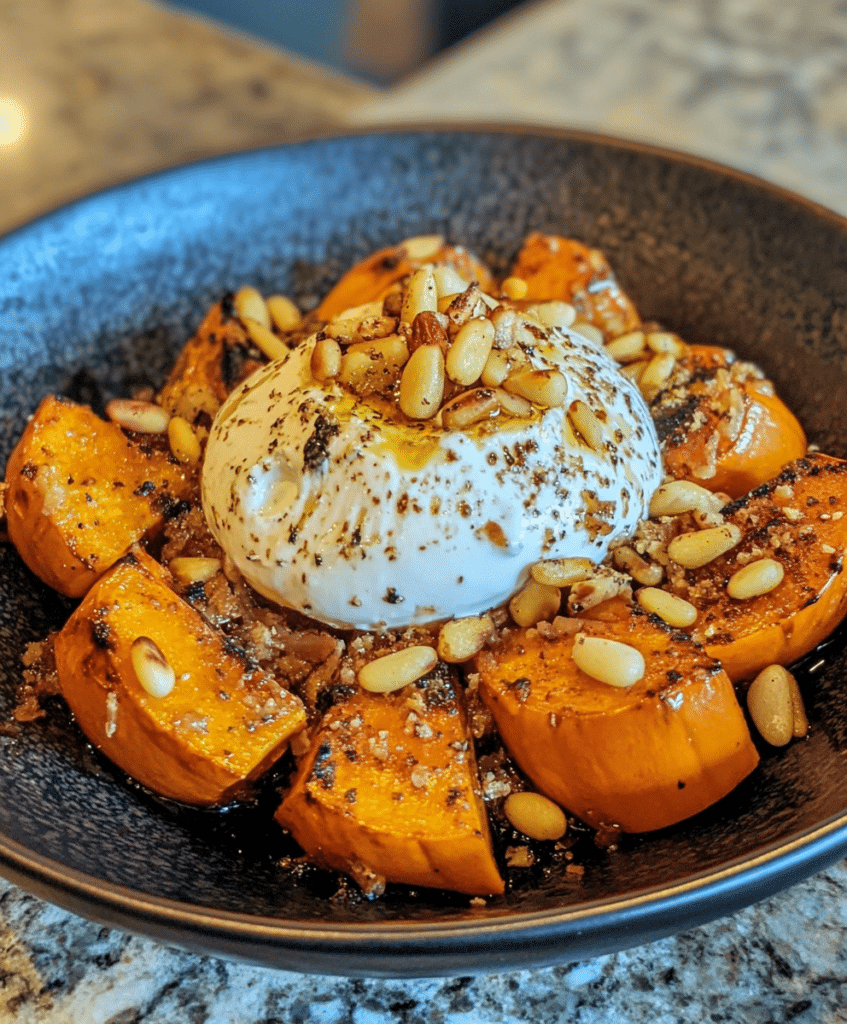
There’s something magical about a dish that looks restaurant-worthy yet comes together with just a handful of fresh ingredients. As cubes of butternut squash roast in the oven, their edges turn beautifully caramelized while their centers become soft and naturally sweet. Add creamy burrata, toasted pine nuts, fragrant herbs, and a drizzle of olive oil, and suddenly you have a dish that feels both comforting and sophisticated.
Beast Roasted Butternut Squash with Burrata and Pine Nuts celebrates the flavors of autumn while remaining simple enough for any home cook. Whether you are preparing a holiday feast, hosting a dinner party, or looking for an elegant vegetarian meal, this recipe offers a perfect balance of creamy, crunchy, sweet, and savory textures.
Unlike many elaborate side dishes, this recipe requires very little hands-on work. Most of the cooking happens in the oven, allowing you to focus on preparing the rest of your meal while the squash develops deep caramelization.
If you enjoy recipes that highlight seasonal vegetables without masking their natural flavor, this roasted butternut squash recipe deserves a place in your collection.
Why You’ll Love Beast Roasted Butternut Squash with Burrata and Pine Nuts
This recipe is much more than roasted vegetables. Every ingredient contributes its own unique texture and flavor, creating a balanced dish that works for almost any occasion.
You’ll love it because it offers:
- Beautiful caramelized butternut squash
- Rich, creamy burrata cheese
- Toasted pine nuts for crunch
- Fresh herbs that brighten every bite
- Simple ingredients with elegant presentation
- Easy preparation
- Naturally vegetarian
- Perfect for fall and winter meals
- Great for holidays and entertaining
- Easy customization with seasonal ingredients
Whether served as an appetizer, side dish, or light lunch, this recipe always feels special without being complicated.
What Is Roasted Butternut Squash with Burrata and Pine Nuts?
This elegant recipe combines roasted squash with fresh burrata cheese and toasted pine nuts.
The squash is roasted until tender with lightly caramelized edges. Once removed from the oven, creamy burrata is placed on top, allowing its rich center to soften gently from the warmth of the vegetables.
To finish, toasted pine nuts, herbs, olive oil, and optional balsamic glaze complete the dish.
The result combines several textures:
- Creamy
- Crispy
- Tender
- Crunchy
- Juicy
- Buttery
Each bite delivers sweet roasted squash, silky cheese, crunchy nuts, and aromatic herbs.
Why Burrata Pairs Perfectly with Butternut Squash
Butternut squash naturally develops sweetness during roasting.
Burrata provides the perfect contrast by adding:
- Mild dairy richness
- Fresh creamy texture
- Soft interior
- Light acidity
- Delicate flavor
Instead of competing with the squash, burrata enhances it.
The toasted pine nuts complete the trio by adding nutty richness and pleasant crunch.
Ingredients for Beast Roasted Butternut Squash with Burrata and Pine Nuts
Main Ingredients
| Ingredient | Quantity | Purpose |
|---|---|---|
| Butternut squash | 1 large | Main vegetable |
| Burrata cheese | 2 balls | Creamy topping |
| Pine nuts | ⅓ cup | Crunch |
| Olive oil | 3 tablespoons | Roasting |
| Garlic | 2 cloves, minced | Flavor |
| Fresh thyme | 1 tablespoon | Herb |
| Fresh sage | 1 tablespoon | Seasonal aroma |
| Salt | To taste | Seasoning |
| Black pepper | To taste | Mild spice |
Optional Finishing Ingredients
| Ingredient | Why Use It |
|---|---|
| Balsamic glaze | Sweet acidity |
| Honey | Gentle sweetness |
| Maple syrup | Rich fall flavor |
| Lemon juice | Fresh brightness |
| Chili flakes | Mild heat |
| Parmesan | Extra savory flavor |
| Fresh basil | Herbal freshness |
| Pomegranate seeds | Color and sweetness |
| Arugula | Peppery contrast |
Choosing the Best Butternut Squash
Your finished dish begins with selecting a quality squash.
Choose one that feels:
- Heavy for its size
- Firm all over
- Free from bruises
- Matte rather than shiny
- Evenly beige
- Dry around the stem
Avoid squash with:
- Soft spots
- Wrinkled skin
- Mold
- Cracks
- Wet areas
A medium-sized squash is often easier to cut and usually has fewer fibrous sections.
How Much Squash Do You Need?
For four people as a side dish, one medium or large squash is usually enough.
If serving as part of a holiday meal with many other dishes, you may need less per person.
For a vegetarian main course, consider using two squash or serving the dish alongside grains.
How to Peel and Cut Butternut Squash
Many people think butternut squash is difficult to prepare, but with a few simple steps it becomes much easier.
Step 1: Trim Both Ends
Use a sharp chef’s knife to remove:
- Stem
- Bottom end
Creating flat surfaces helps stabilize the squash.
Step 2: Peel
Use a sturdy vegetable peeler.
Peel downward in long strokes until all beige skin is removed.
Step 3: Separate the Neck from the Bulb
Cut across where the straight neck meets the round bottom.
This makes both sections easier to handle.
Step 4: Remove the Seeds
Cut the bulb in half lengthwise.
Use a spoon to scoop out:
- Seeds
- Stringy fibers
You can save the seeds for roasting later.
Best Shapes for Roasting
There are several ways to cut butternut squash.
Cubes
Perfect for:
- Salads
- Grain bowls
- Side dishes
They roast evenly and are easy to eat.
Wedges
Excellent for:
- Holiday platters
- Elegant presentation
They create large caramelized surfaces.
Half-Moons
A beautiful option for appetizers and buffet tables.
Why Uniform Pieces Matter
Even-sized pieces help ensure:
- Consistent roasting
- Better caramelization
- Tender centers
- Attractive presentation
Large differences in size may cause:
- Burned small pieces
- Undercooked larger cubes
Aim for pieces around one inch in size.
How to Season the Squash
One reason this recipe tastes so balanced is its simple seasoning.
Place the squash in a large bowl.
Add:
- Olive oil
- Salt
- Black pepper
- Garlic
- Fresh thyme
- Fresh sage
Toss thoroughly until every piece is lightly coated.
The olive oil encourages caramelization while helping the herbs cling to the squash.
Optional Flavor Enhancements
Depending on the occasion, you can also add:
- Honey
- Maple syrup
- Cinnamon
- Nutmeg
- Smoked paprika
- Chili flakes
For a savory version, Parmesan added after roasting works beautifully.
How to Roast Butternut Squash Until Perfectly Caramelized
Roasting is where the magic happens.
High oven heat transforms the squash from firm and mild into tender, sweet, and deeply flavorful.
Step 1: Preheat the Oven
A fully heated oven promotes caramelization instead of steaming.
Preheat your oven to 425°F (220°C).
Step 2: Prepare the Baking Sheet
Line the tray with parchment paper if desired.
Although optional, parchment makes cleanup easier.
Step 3: Arrange the Squash
Spread the cubes in a single layer.
Leave small spaces between pieces.
Crowding causes the squash to steam instead of brown.
If necessary, divide the squash between two trays.
Step 4: Roast
Bake until:
- The edges become golden
- The centers are fork tender
- The surface develops caramelized spots
Turn the squash halfway through roasting for even color.
Avoid excessive stirring because constant movement prevents caramelization.
How Do You Know the Squash Is Done?
Perfect roasted squash should have:
- Deep golden edges
- Soft interior
- Slight caramelization
- No firmness in the center
A fork should slide easily through each cube while the outside still holds its shape.
How to Toast Pine Nuts
Although pine nuts are small, they contribute enormous flavor.
Their delicate oils toast quickly, producing buttery, nutty aromas that complement both burrata and roasted squash.
Stovetop Method
- Place pine nuts in a dry skillet.
- Cook over medium-low heat.
- Stir constantly.
- Remove immediately once golden.
They continue cooking after leaving the pan.
Never walk away during this step because pine nuts burn very quickly.
Oven Method
Spread them in a single layer on a baking tray.
Toast briefly until lightly golden, checking frequently.
A properly toasted pine nut should be:
- Golden
- Aromatic
- Crisp
- Never dark brown
Why Pine Nuts Burn So Easily
Unlike many larger nuts, pine nuts contain a high amount of natural oil.
Because of their size, they heat rapidly.
Removing them just before they appear fully toasted helps prevent overcooking.
Once cooled, they become even crispier.
Preparing Burrata
Burrata is the star ingredient that transforms roasted vegetables into an elegant restaurant-style dish.
Unlike mozzarella, burrata contains a creamy center made from soft curds and cream.
For the best texture:
- Remove it from the refrigerator shortly before serving.
- Drain excess liquid.
- Handle gently.
Do not bake the burrata.
Instead, place it over the warm squash after roasting so the heat softens the creamy interior without melting it completely.
When serving, allow guests to cut into the burrata themselves. The creamy center naturally spreads over the roasted squash, creating an incredibly luxurious sauce.