
Few dishes prove the power of simple ingredients quite like Best Indonesian Nasi Goreng. You can start with a bowl of cold leftover rice, a handful of aromatics, a few pantry sauces, and perhaps an egg or some cooked chicken. Within minutes, those everyday ingredients become a deeply savory, slightly sweet, smoky fried rice packed with Indonesian-inspired flavor.
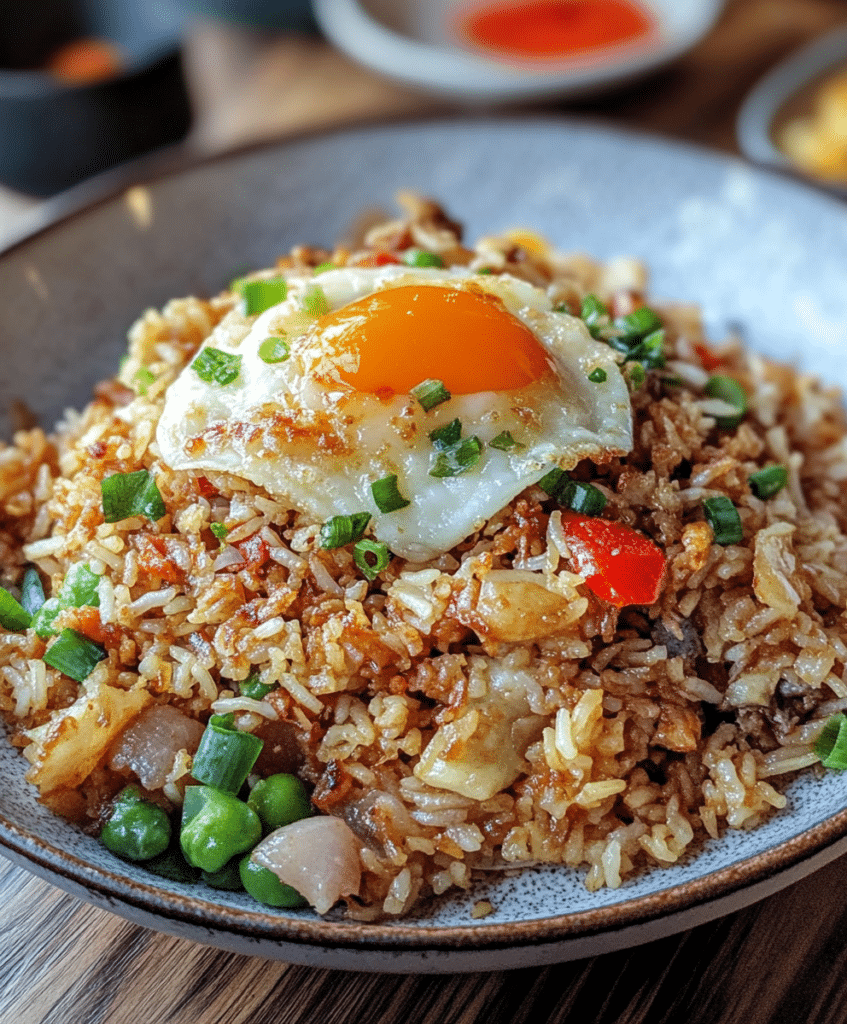
There is something especially comforting about the way nasi goreng comes together in a hot wok. Shallots and garlic become fragrant almost immediately, chili adds warmth, and kecap manis coats the rice in a glossy, caramel-colored sauce. A crispy-edged fried egg on top turns a humble bowl of rice into a complete meal.
You can serve nasi goreng for breakfast, lunch, or dinner. You can keep it simple with vegetables and egg, or make it heartier with chicken, shrimp, beef, tofu, or tempeh. That flexibility is one reason this fried rice works so well when you want a quick meal without sacrificing flavor.
If you have leftover rice waiting in your refrigerator, this recipe gives you one of the tastiest ways to use it.
What Is Indonesian Nasi Goreng?
“Nasi goreng” literally refers to fried rice in Indonesian and Malay usage, but the dish has a flavor profile that makes it noticeably different from many other fried rice recipes.
Indonesian nasi goreng often features kecap manis, a thick, sweet soy sauce that gives the rice its dark color and distinctive sweet-savory character. Garlic, shallots, chilies, sambal, and white pepper contribute additional flavor.
The finished rice is commonly served with a fried egg and fresh garnishes such as cucumber and tomato.
Depending on the version, you might also see:
- Chicken
- Shrimp
- Beef
- Anchovies
- Vegetables
- Tempeh
- Tofu
- Fried shallots
- Krupuk or crackers
That means you can adapt nasi goreng to what you already have in your kitchen.
Why You’ll Love This Best Indonesian Nasi Goreng
You don’t need an elaborate ingredient list to make fried rice taste exciting.
You’ll love this recipe because it is:
- Ready in about 30 minutes
- Excellent for leftover rice
- Budget-friendly
- Easy to customize
- Suitable for breakfast, lunch, or dinner
- Sweet, savory, and slightly smoky
- Easy to make vegetarian
- Perfect for adding leftover proteins
- Made mostly in one pan
It is also a practical recipe for reducing food waste because yesterday’s rice becomes the ideal ingredient rather than something you need to throw away.
Ingredients for Indonesian Nasi Goreng
Main Ingredients
| Ingredient | Amount | Purpose |
|---|---|---|
| Cooked cold rice | 4 cups | Main base |
| Vegetable oil | 2 tbsp | Stir-frying |
| Eggs | 2–4 | Topping or protein |
| Shallots | 2, thinly sliced | Aromatic sweetness |
| Garlic | 3 cloves, minced | Savory depth |
| Red chili | 1–2 | Heat |
| Green onions | 3 | Fresh finish |
Nasi Goreng Sauce
| Ingredient | Amount | Purpose |
|---|---|---|
| Kecap manis | 3 tbsp | Sweet-savory flavor |
| Soy sauce | 1 tbsp | Salt and umami |
| Oyster sauce | 1 tbsp, optional | Richness |
| Sambal oelek | 1 tsp, optional | Chili heat |
| White pepper | ½ tsp | Warm spice |
Optional Protein Add-Ins
| Ingredient | Amount |
|---|---|
| Cooked chicken | 1 cup |
| Shrimp | 1 cup |
| Thinly sliced beef | 1 cup |
| Tofu | 1 cup |
| Tempeh | 1 cup |
Garnishes
You can finish your nasi goreng with:
- Fried egg
- Cucumber slices
- Tomato wedges
- Fried shallots
- Sambal
- Lime wedges
- Krupuk or other savory crackers
What Is Kecap Manis?
Kecap manis is an Indonesian sweet soy sauce.
It is thicker and sweeter than standard soy sauce and often has a syrupy consistency. It gives nasi goreng much of its characteristic dark color and sweet-savory flavor.
If you want your fried rice to taste distinctly Indonesian-inspired, kecap manis is one of the most useful ingredients to include.
Can You Substitute Kecap Manis?
If you can’t find it, you can make a quick approximation.
Combine:
- 2 tablespoons soy sauce
- 1 tablespoon brown sugar
Heat briefly until the sugar dissolves and the mixture thickens slightly.
It won’t be exactly the same as traditional kecap manis, but it can work when you need a convenient substitute.
Why Cold Rice Works Best
If you remember only one technique from this recipe, make it this one: use cold rice whenever possible.
Freshly cooked rice contains a lot of moisture and steam. When you place it in a wok, the grains may clump together instead of frying.
Cold rice has had time to dry slightly, helping the grains stay more separate.
That gives you:
- Better texture
- Less clumping
- More browning
- Better sauce absorption
- Easier tossing
What If You Only Have Fresh Rice?
You can still make nasi goreng.
Spread freshly cooked rice in a thin layer over a baking sheet or large plate.
Let it cool until the steam disappears.
For even better texture, refrigerate it uncovered briefly before cooking.
The goal is to remove excess surface moisture.
Best Rice for Nasi Goreng
Jasmine Rice
Jasmine rice is fragrant and works beautifully because the grains stay relatively separate when chilled.
Long-Grain White Rice
Regular long-grain rice is another dependable option.
Medium-Grain Rice
You can use it, but the final fried rice may be slightly softer or stickier.
Whatever you choose, properly chilled rice is more important than the exact variety.
How to Make Best Indonesian Nasi Goreng
Step 1: Prepare Everything Before Cooking
Stir-frying moves quickly.
Once your wok becomes hot, you don’t want to pause to chop garlic or measure sauces.
Prepare everything first.
You should have:
- Cold rice separated into loose grains
- Shallots sliced
- Garlic minced
- Chili chopped
- Green onions sliced
- Protein prepared
- Sauce ingredients measured
- Garnishes ready
This simple preparation makes the actual cooking process much easier.
Step 2: Fry the Eggs
Heat a small amount of oil in your wok or skillet.
Crack in the eggs.
Cook until the whites are set and the edges become lightly crisp.
You can leave the yolks soft or cook them completely depending on your preference.
Transfer the eggs to a plate.
You’ll add them on top of the nasi goreng before serving.
Why Add a Fried Egg?
The runny or soft yolk adds richness when it mixes with the hot rice.
It also makes a simple bowl of fried rice feel more substantial.
Step 3: Cook the Aromatics
Add a little more oil if necessary.
Add the shallots.
Cook briefly until they begin to soften.
Add the garlic and chili.
Stir constantly.
You should smell the garlic quickly.
Don’t Burn the Garlic
A wok can become very hot.
Garlic burns faster than shallot, so add it slightly later and keep everything moving.
Burned garlic creates bitterness that can overpower the entire dish.
Step 4: Add Your Protein
If you’re using chicken, shrimp, beef, tofu, or tempeh, add it now.
For Cooked Chicken
Add shredded or diced chicken and stir until heated through.
For Shrimp
Cook until pink and opaque, then continue with the rice.
For Beef
Use thin strips so they cook quickly.
For Tofu or Tempeh
Brown cubes first for better texture.
Once your protein is hot and lightly browned, move to the rice.
Step 5: Add the Cold Rice
Add the rice to the wok.
Break apart any remaining clumps immediately.
Use your spatula to toss and turn the grains so they make contact with the hot surface.
Cook for a few minutes before adding the sauce.
This short frying period helps create the lightly toasted flavor that makes fried rice so satisfying.
Use High Enough Heat
Fried rice benefits from a hot pan.
If your pan is barely warm, the rice warms slowly and can become soft instead of lightly toasted.
Step 6: Add the Sauce
Pour the kecap manis over the rice.
Add soy sauce, oyster sauce if using, and sambal.
Toss thoroughly.
You want the sauce evenly distributed rather than concentrated in one part of the wok.
The rice should develop a beautiful dark brown color.
Don’t Add Too Much Sauce
More sauce doesn’t automatically mean more flavor.
Too much liquid can make your fried rice wet and sticky.
Start with the recommended amounts, taste, and add more only if necessary.
Step 7: Add Green Onions and White Pepper
Stir in the sliced green onions.
Season with white pepper.
Taste the rice.
If it needs additional saltiness, add a small splash of soy sauce.
If you want more heat, add extra sambal.
If it tastes too rich, a squeeze of lime can brighten the flavors.
Step 8: Serve With Traditional-Style Garnishes
Divide the fried rice between bowls or plates.
Top each portion with a fried egg.
Arrange cucumber slices and tomato wedges alongside.
Finish with:
- Fried shallots
- Sambal
- Green onion
- Lime
- Krupuk
Serve immediately while the rice is hot.
Expert Tips for Perfect Indonesian Nasi Goreng
Use Day-Old Rice
This gives you the most reliable texture.
Keep the Pan Hot
A hot wok encourages frying instead of steaming.
Don’t Overcrowd the Pan
If you’re making a large amount, cook in batches.
Prep Ingredients First
Once cooking begins, everything moves quickly.
Add Sauce Gradually
You can always add more.
It’s much harder to rescue fried rice that has become overly wet.
Break Up Rice Before Cooking
Don’t wait until it’s already in the wok.
Separate the grains with your fingers or a fork before frying.
Serve Immediately
Nasi goreng tastes best while freshly cooked.
Common Mistakes to Avoid
Your Fried Rice Is Mushy
Possible reasons include:
- Rice was freshly cooked and hot
- Too much sauce
- Pan wasn’t hot enough
- Wok was overcrowded
Your Rice Is Clumpy
Cold rice can form blocks in the refrigerator.
Break them apart completely before adding them to the wok.
The Nasi Goreng Is Too Sweet
You may have used too much kecap manis.
Balance it with regular soy sauce, chili, lime, or additional rice.
The Rice Tastes Flat
Try adding:
- More shallot
- More garlic
- White pepper
- Sambal
- Lime juice
- Fried shallots
Sometimes the issue isn’t salt—it may simply need stronger aromatics or acidity.
Easy Indonesian Nasi Goreng Variations
Chicken Nasi Goreng
Add cooked chicken to the aromatics before adding rice.
This is one of the easiest ways to transform leftover roast or grilled chicken.
Shrimp Nasi Goreng
Cook shrimp directly in the wok.
Garlic, chili, kecap manis, and lime complement shrimp particularly well.
Beef Nasi Goreng
Use thin strips of beef and cook quickly over high heat.
Vegetarian Nasi Goreng
Skip meat and use:
- Tofu
- Tempeh
- Mushrooms
- Carrots
- Peas
- Cabbage
If you’re avoiding oyster sauce, use a vegetarian alternative.
Spicy Nasi Goreng
Increase:
- Sambal
- Fresh chili
- Chili flakes
You can also serve additional sambal at the table.
Best Vegetables to Add
Nasi goreng is an easy place to use vegetables that are already in your refrigerator.
Try:
- Carrots
- Peas
- Cabbage
- Green beans
- Bell peppers
- Corn
- Bean sprouts
- Bok choy
When Should You Add Vegetables?
Dense vegetables such as carrots should go in earlier.
Quick-cooking vegetables such as bean sprouts and leafy greens should be added near the end so they stay fresh and slightly crisp.
What to Serve With Indonesian Nasi Goreng
Nasi goreng can be a complete meal by itself, especially with protein and a fried egg.
For a larger meal, serve it with:
- Chicken satay
- Grilled chicken
- Tempeh
- Pickled vegetables
- Cucumber salad
- Stir-fried vegetables
Traditional-style garnishes add plenty of interest without requiring another full side dish.
Make-Ahead Tips
Cook Your Rice the Day Before
This is actually ideal.
Store cooked rice in the refrigerator once cooled safely.
Prepare the Sauce Ahead
Mix kecap manis, soy sauce, oyster sauce, and sambal in a small container.
Refrigerate until needed.
Chop Your Vegetables
When all your ingredients are ready, dinner can come together in minutes.
Storage and Reheating
Refrigerating Leftover Nasi Goreng
Cool leftovers promptly and place them in an airtight container.
Store them in the refrigerator and use within a few days.
Cooked rice should not be left sitting at room temperature for long periods.
Can You Freeze Nasi Goreng?
Yes.
Divide it into individual portions and freeze in airtight containers.
Egg garnishes are better prepared fresh rather than frozen with the rice.
Best Way to Reheat
A hot skillet or wok gives you the best texture.
Add a teaspoon of oil and stir-fry until hot.
The microwave is convenient, but the texture may be softer.
Approximate Nutrition Information
Exact values depend on protein, oil, sauces, and serving size.
| Nutrient | Approximate Amount Per Serving |
|---|---|
| Calories | 400–520 kcal |
| Protein | 12–25 g |
| Carbohydrates | 55–70 g |
| Fat | 12–20 g |
| Fiber | 2–5 g |
| Sodium | Varies |
These figures are estimates rather than precise nutritional calculations.
Frequently Asked Questions About Best Indonesian Nasi Goreng
What makes Best Indonesian Nasi Goreng different from regular fried rice?
Kecap manis is one of the defining ingredients. It gives nasi goreng its darker color and sweet-savory flavor, while shallots, sambal, garlic, and traditional toppings add more Indonesian character.
Can I make Best Indonesian Nasi Goreng with fresh rice?
Yes, but let the rice cool and dry before frying.
What is kecap manis?
Kecap manis is a thick Indonesian sweet soy sauce commonly used to add sweetness, color, and savory depth.
Can I make nasi goreng without kecap manis?
Yes. Mix regular soy sauce with brown sugar as an approximation.
Which rice works best?
Cold jasmine or long-grain white rice generally works particularly well.
Can I add chicken or shrimp?
Absolutely. Both are excellent additions.
Is Indonesian nasi goreng spicy?
It can be. You control the heat through fresh chili and sambal.
Can I make it vegetarian?
Yes. Use tofu, tempeh, mushrooms, and vegetables.
Why is my nasi goreng soggy?
Warm rice, excessive sauce, low heat, and overcrowding are the most common reasons.
What toppings work best?
Fried egg, cucumber, tomato, fried shallots, sambal, and krupuk are classic choices.
Conclusion
This Best Indonesian Nasi Goreng is proof that leftover rice can become one of the most satisfying meals in your kitchen.
With fragrant shallots, garlic, chili, kecap manis, soy sauce, and a hot wok, you can transform ordinary cold rice into something smoky, savory, slightly sweet, and packed with flavor.
The recipe is flexible enough to fit whatever you have available. Add chicken for a hearty weeknight dinner, shrimp for a seafood version, beef for extra richness, or tofu and vegetables for a meat-free meal.
For the best results, remember the simple fundamentals: use cold rice, prepare all your ingredients before cooking, keep your pan hot, and don’t drown the rice in sauce.
Then finish your plate the Indonesian-inspired way—with a fried egg, cucumber, tomato, fried shallots, lime, and sambal.
Make this Best Indonesian Nasi Goreng the next time leftover rice is sitting in your refrigerator. If you try it, leave a comment sharing your favorite protein or topping combination, save the recipe for your next quick dinner, and share it with someone who loves bold, easy fried-rice recipes.