
When you want something warm, filling, and packed with savory flavor, a steaming bowl of Beef and Broccoli Ramen Soup can turn an ordinary dinner into something you genuinely look forward to. It combines the familiar appeal of beef and broccoli with springy ramen noodles and a fragrant garlic-ginger broth.
The beauty of this recipe is that you don’t need an elaborate ingredient list or several pans. You sear thin slices of beef, build the broth in the same pot, cook the broccoli until crisp-tender, and add the ramen noodles right at the end. The result is a satisfying bowl with plenty of contrasting textures.
You can also make this easy beef ramen soup your own. Add mushrooms for extra savory flavor, drizzle chili oil over the top when you want heat, add a soft-boiled egg, or increase the vegetables for an even more substantial bowl.
Whether you’re searching for an easy weeknight dinner or simply want to turn everyday ramen into something more exciting, this Beef and Broccoli Ramen Soup recipe deserves a spot in your rotation.
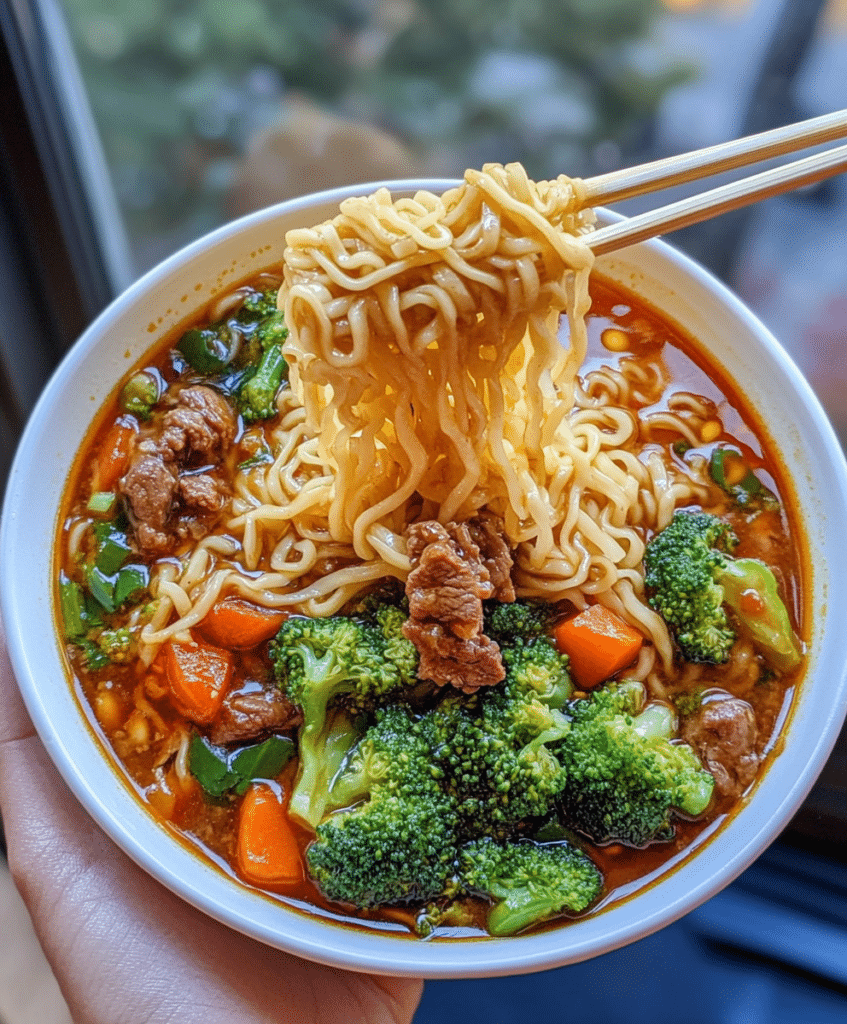
Why You’ll Love This Beef and Broccoli Ramen Soup
You don’t need restaurant-level ramen skills to make a flavorful noodle soup at home. This recipe relies on simple techniques and ingredients that are easy to find.
You’ll love it because it’s:
- Easy to prepare in one pot
- Packed with tender beef and broccoli
- Full of garlic and ginger flavor
- Customizable for different spice levels
- Great for busy weeknight dinners
- Easy to load with additional vegetables
- Comforting without requiring hours of simmering
The combination also makes sense from a texture standpoint. Your beef stays tender when cooked quickly, the broccoli adds freshness and bite, and the ramen noodles absorb some of that savory broth.
Beef and Broccoli Ramen Soup Ingredients
Most of these ingredients are straightforward, but using good-quality broth and fresh aromatics makes a noticeable difference.
Main Ingredients
| Ingredient | Amount | Notes |
|---|---|---|
| Beef sirloin or flank steak | 1 lb | Thinly sliced against the grain |
| Ramen noodles | 3 packages | Seasoning packets not required |
| Broccoli florets | 3 cups | Cut into bite-sized pieces |
| Beef broth | 6 cups | Lower-sodium preferred |
| Soy sauce | ¼ cup | Adjust according to broth saltiness |
| Fresh ginger | 1 tbsp | Finely grated |
| Garlic | 4 cloves | Minced |
| Sesame oil | 2 tsp | For finishing |
| Brown sugar or honey | 1 tbsp | Balances the savory broth |
| Neutral cooking oil | 1 tbsp | For searing |
| Green onions | 3 | Thinly sliced |
| Black pepper | To taste | For seasoning |
| Red pepper flakes | Optional | For heat |
Optional Ramen Toppings
One of the best things about homemade ramen is customizing each bowl.
Try:
- Soft-boiled eggs
- Toasted sesame seeds
- Green onions
- Chili oil
- Sautéed mushrooms
- Fresh cilantro
- Bok choy
- Shredded carrots
- Lime wedges
Keep the toppings simple or set several on the table and let everyone build their own bowl.
What’s the Best Beef for Beef and Broccoli Ramen Soup?
You want beef that cooks quickly and remains tender when thinly sliced.
Sirloin Steak
Sirloin is a practical choice because it offers good beef flavor and works well with fast cooking.
Trim excess fat and slice the steak thinly.
Flank Steak
Flank steak is another excellent option for beef broccoli ramen.
The important part is how you slice it.
Look closely at the lines running through the meat. Those are the muscle fibers, or grain. Cut across those lines rather than parallel to them.
Easy Trick for Thinly Sliced Beef
If your steak is difficult to slice, put it in the freezer briefly until it becomes firmer but isn’t frozen solid.
A firmer piece of meat is easier to cut into thin, relatively uniform slices.
For food safety, USDA guidance recommends that whole beef steaks reach a minimum internal temperature of 145°F (62.8°C) followed by at least a three-minute rest. (FSIS)
How to Make Beef Tender for Ramen Soup
Tender beef is one of the details that separates a great bowl from a disappointing one.
The first rule is simple: don’t simmer thin slices of beef for the entire cooking process.
Instead, sear them quickly and remove them. You can return the beef to the soup near the end.
Optional Beef Marinade
For additional flavor, toss your sliced beef with:
- 1 tablespoon soy sauce
- 1 teaspoon sesame oil
- 1 minced garlic clove
- ½ teaspoon grated ginger
- 1 teaspoon brown sugar or honey
Let the beef absorb the seasoning while you prepare the vegetables and broth ingredients.
How to Make Beef and Broccoli Ramen Soup
Have your ingredients prepared before you begin. Once your pot is hot, the recipe moves fairly quickly.
Step 1 – Prepare Everything
Slice the beef thinly against the grain.
Cut your broccoli into bite-sized florets, mince the garlic, grate the ginger, and slice the green onions.
Measure the broth, soy sauce, and other seasonings.
Having everything ready prevents your garlic, broccoli, or noodles from overcooking while you’re searching for another ingredient.
Step 2 – Sear the Beef
Heat a large soup pot or Dutch oven over medium-high heat.
Add the neutral oil.
Once hot, add the beef in a single layer. If your pot isn’t large enough, work in batches.
Overcrowding traps moisture and encourages steaming instead of browning.
Sear the beef, then transfer it to a clean plate.
Step 3 – Build the Garlic-Ginger Broth
Reduce the heat slightly.
Add the garlic and ginger to the same pot.
Cook briefly, stirring so the garlic doesn’t burn.
Pour in:
- Beef broth
- Soy sauce
- Brown sugar or honey
Stir well and scrape the bottom of the pot to release flavorful browned bits left from the beef.
Bring your broth to a gentle simmer.
Step 4 – Add the Broccoli
Add your broccoli florets to the simmering broth.
Cook only until they reach your preferred tenderness.
For the best texture, aim for broccoli that’s tender enough to eat easily but still has some bite.
You don’t want it falling apart in the soup.
Step 5 – Add the Ramen Noodles
Now add your ramen noodles.
Cook according to their package directions, since different brands and noodle thicknesses can require different cooking times.
Avoid cooking them much longer than necessary.
Ramen noodles continue sitting in hot liquid after you turn off the heat, so slightly careful timing helps prevent them from becoming overly soft.
Step 6 – Return the Beef
Return the cooked beef and any accumulated juices to the pot.
Heat everything through without unnecessarily simmering the beef for a long time.
Step 7 – Finish Your Ramen Soup
Turn off the heat and stir in the sesame oil.
Taste the broth.
Add black pepper and, if necessary, a little additional soy sauce. Remember that both beef broth and soy sauce can contribute plenty of salt, so taste before adding more.
Divide the soup among bowls.
Finish with green onions, sesame seeds, chili oil, or your favorite toppings.
How to Make the Best Beef Ramen Broth
A good ramen broth doesn’t necessarily require dozens of ingredients.
For this quick recipe, each ingredient has a clear purpose.
Beef Broth
This forms the savory foundation.
Using a lower-sodium broth gives you greater control because soy sauce will add more salt later.
Soy Sauce
Soy sauce brings saltiness and savory depth.
Add it gradually if your broth is already well seasoned.
Fresh Ginger
Fresh ginger gives your broth warmth and aromatic freshness.
Garlic
Garlic adds another savory layer and works particularly well with beef, broccoli, soy sauce, and sesame.
Sesame Oil
Use sesame oil primarily as a finishing ingredient rather than the main frying oil.
A little goes a long way.
Brown Sugar or Honey
You’re not trying to create a sweet soup.
A small amount of sweetness simply rounds out the stronger salty and savory flavors.
How to Make Spicy Beef and Broccoli Ramen
If you like spicy ramen, this recipe is easy to adjust.
Try adding:
- Chili oil
- Red pepper flakes
- Fresh sliced chilies
- Chili-garlic sauce
- Your favorite hot sauce
Start with a small amount.
You can always make your bowl hotter, but it’s difficult to rescue broth after you’ve added too much chili.
How to Cook Perfect Broccoli for Ramen Soup
Broccoli can go from pleasantly crisp to overly soft surprisingly quickly.
That’s why you add it during the later stages rather than letting it simmer throughout the recipe.
Fresh Broccoli
Fresh broccoli gives you the most control over texture.
Cut larger florets into smaller pieces so they cook evenly.
Frozen Broccoli
Frozen broccoli works when convenience matters.
Because it has already undergone processing before freezing and tends to soften more readily, watch its cooking time carefully.
How to Keep Ramen Noodles From Getting Mushy
This is particularly important if you plan on having leftovers.
Ramen noodles continue absorbing broth as they sit.
That means a perfect bowl tonight can become extremely soft by tomorrow if everything is stored together.
For Immediate Serving
Cook the noodles directly in the broth and serve promptly.
For Meal Prep
Cook your noodles separately.
Then divide them among individual portions and add hot broth when you’re ready to eat.
This keeps the noodles from soaking up too much liquid during storage.
Expert Tips for the Best Beef and Broccoli Ramen Soup
Use these simple techniques to improve your homemade ramen:
- Slice beef thinly against the grain.
- Prepare all ingredients before cooking.
- Sear beef in batches if necessary.
- Don’t simmer the beef throughout the entire recipe.
- Use fresh garlic and ginger.
- Start with lower-sodium broth.
- Keep broccoli crisp-tender.
- Add ramen toward the end.
- Store noodles separately when meal prepping.
- Add sesame oil after the strongest heat.
- Taste before adding extra soy sauce.
- Garnish immediately before serving.
Common Beef and Broccoli Ramen Mistakes
Your Beef Is Tough
This can happen when the meat is:
- Cut too thickly
- Sliced with the grain
- Cooked too long
Thin slices and quick cooking are your friends here.
Your Broccoli Is Mushy
You probably added it too early.
Add broccoli closer to the end and check it frequently.
Your Ramen Is Too Soft
Ramen cooks quickly and continues softening in hot broth.
Add it near the end and serve the soup soon after cooking.
Your Broth Is Too Salty
The combination of packaged broth and soy sauce can quickly increase saltiness.
Lower-sodium broth gives you more flexibility.
If you’re using packaged instant ramen, you don’t need to automatically add the included seasoning packet when you’re already making your own broth.
Delicious Beef and Broccoli Ramen Variations
Once you’ve made the basic recipe, you can easily turn it into several different meals.
Spicy Beef and Broccoli Ramen
Add chili oil and fresh chili for a hotter version.
Mushroom Beef Ramen
Sauté mushrooms before building the broth.
Good options include:
- Shiitake
- Cremini
- Oyster mushrooms
Beef Ramen with Egg
Top each serving with a soft-boiled egg.
The creamy yolk adds richness when it mixes into the broth.
Extra-Vegetable Beef Ramen
Add vegetables such as:
- Bok choy
- Carrots
- Snow peas
- Mushrooms
- Bell peppers
Just stagger their cooking times so each vegetable reaches the right texture.
What to Serve with Beef and Broccoli Ramen Soup
Your soup already contains beef, noodles, vegetables, and broth, so you don’t need a complicated side dish.
Try pairing it with:
- Cucumber salad
- Edamame
- Steamed dumplings
- Asian-style cabbage slaw
- Vegetable spring rolls
- Pickled vegetables
A fresh, crunchy side is particularly nice because it contrasts with the hot noodle soup.
How to Meal Prep Beef and Broccoli Ramen Soup
For meal prep, preparing individual components separately works better than assembling complete bowls several days ahead.
You can prepare:
- Beef
- Broccoli
- Broth
- Noodles
- Garnishes
Store your noodles separately from the broth.
When you’re ready to eat, reheat the soup and combine everything shortly before serving.
How to Store Beef and Broccoli Ramen Soup
Transfer leftovers into shallow, covered containers and refrigerate promptly. USDA guidance says perishable foods shouldn’t remain at room temperature for more than two hours—or one hour when temperatures are above 90°F—and recommends using most cooked refrigerated leftovers within 3–4 days. (FSIS)
For the best ramen texture, keep noodles in a separate airtight container whenever possible.
How to Reheat Beef and Broccoli Ramen Soup
Reheat your broth, broccoli, and beef on the stovetop, then add the noodles toward the end.
For food safety, USDA guidance recommends reheating leftovers to 165°F (73.9°C) and bringing soups, sauces, and gravies to a boil when reheating. (FSIS)
Add fresh green onions, sesame seeds, or chili oil only after reheating.
Nutritional Overview
The exact nutritional content of your Beef and Broccoli Ramen Soup will depend on your beef, noodles, broth, soy sauce, toppings, and serving size.
In general, the bowl contains:
- Protein from beef
- Carbohydrates from ramen noodles
- Fiber and micronutrients from broccoli
- Fats from beef, cooking oil, and sesame oil
If you want to modify the meal, you can increase the broccoli and other vegetables, adjust the noodle portion, choose a leaner cut of beef, or select lower-sodium broth and soy sauce.
Frequently Asked Questions About Beef and Broccoli Ramen Soup
What beef is best for Beef and Broccoli Ramen Soup?
Sirloin and flank steak are both good choices. Whatever cut you choose, slice it thinly against the grain and avoid unnecessarily long cooking.
Can you use instant ramen noodles?
Absolutely. Instant ramen noodles make this recipe particularly convenient. You can discard the seasoning packets and flavor your soup with homemade garlic-ginger beef broth instead.
How do you keep beef tender in ramen soup?
Slice your beef thinly against the grain, sear it quickly, remove it from the pot, and return it near the end rather than simmering it for the entire cooking time.
When should you add broccoli to Beef and Broccoli Ramen Soup?
Add broccoli during the later part of cooking. This helps preserve its texture instead of turning it extremely soft.
How do you prevent ramen noodles from becoming soggy?
Don’t overcook them, and serve the soup promptly. If you’re preparing leftovers or meal-prep portions, store the noodles separately from the broth.
Can Beef and Broccoli Ramen Soup be made ahead?
Yes. Prepare the broth, beef, and vegetables ahead and store them properly. For the best texture, keep your noodles separate until serving.
How can you make Beef and Broccoli Ramen Soup spicy?
Add chili oil, chili flakes, sliced fresh chili, or chili-garlic sauce. Start with a small quantity and increase the heat to your taste.
Can you add more vegetables?
Definitely. Mushrooms, carrots, bok choy, snow peas, and bell peppers all work well. Add them according to how long each vegetable needs to cook.
Conclusion – Make the Best Beef and Broccoli Ramen Soup Tonight
Beef and Broccoli Ramen Soup is exactly the kind of recipe that makes an easy dinner feel more exciting. You take familiar ingredients—beef, broccoli, ramen noodles, garlic, ginger, and soy sauce—and transform them into a warm, savory bowl that’s satisfying from the first spoonful to the last.
The key is keeping the cooking process simple. Slice your beef thinly and cook it quickly. Add the broccoli late enough to preserve its texture. Let the ramen noodles cook only until tender. Finish everything with sesame oil and fresh green onions.
Once you know the basic method, customize it however you like. Add shiitake mushrooms, a jammy egg, extra broccoli, or a generous drizzle of chili oil. That’s what makes this easy Beef and Broccoli Ramen Soup such a useful recipe—you can keep the comforting foundation while changing the details each time you make it.
Now it’s your turn: make this Beef and Broccoli Ramen Soup for your next cozy dinner. Save the recipe, rate it after you try it, and leave a comment sharing your favorite ramen topping. And if someone you know loves quick noodle dinners, share this recipe with them too.