
There is something almost magical about cutting into a Japanese soufflé pancake. The outside looks tall and beautifully golden, but the inside is remarkably soft, airy, and delicate. Now imagine taking two of those cloud-like pancakes and sandwiching lightly sweetened cream and juicy strawberries between them. That is exactly what you get with this Best Japanese Soufflé Pancake Sando.
This recipe turns the famous Japanese-style soufflé pancake into an eye-catching dessert sandwich. Instead of serving your pancakes in a traditional stack, you pair them with whipped cream, mascarpone, fresh fruit, or another favorite filling.
The technique may look intimidating at first, but the ingredients themselves are remarkably simple. The signature height comes primarily from carefully whipped egg whites. Once you understand how to make a stable meringue, fold it into the batter without knocking out too much air, and cook the pancakes gently over low heat, the process becomes much easier.
Whether you prepare these fluffy pancake sandos for weekend brunch, afternoon tea, Valentine’s Day, a birthday breakfast, or simply because you want to try something different, the result is a dessert that looks impressive while remaining wonderfully light.
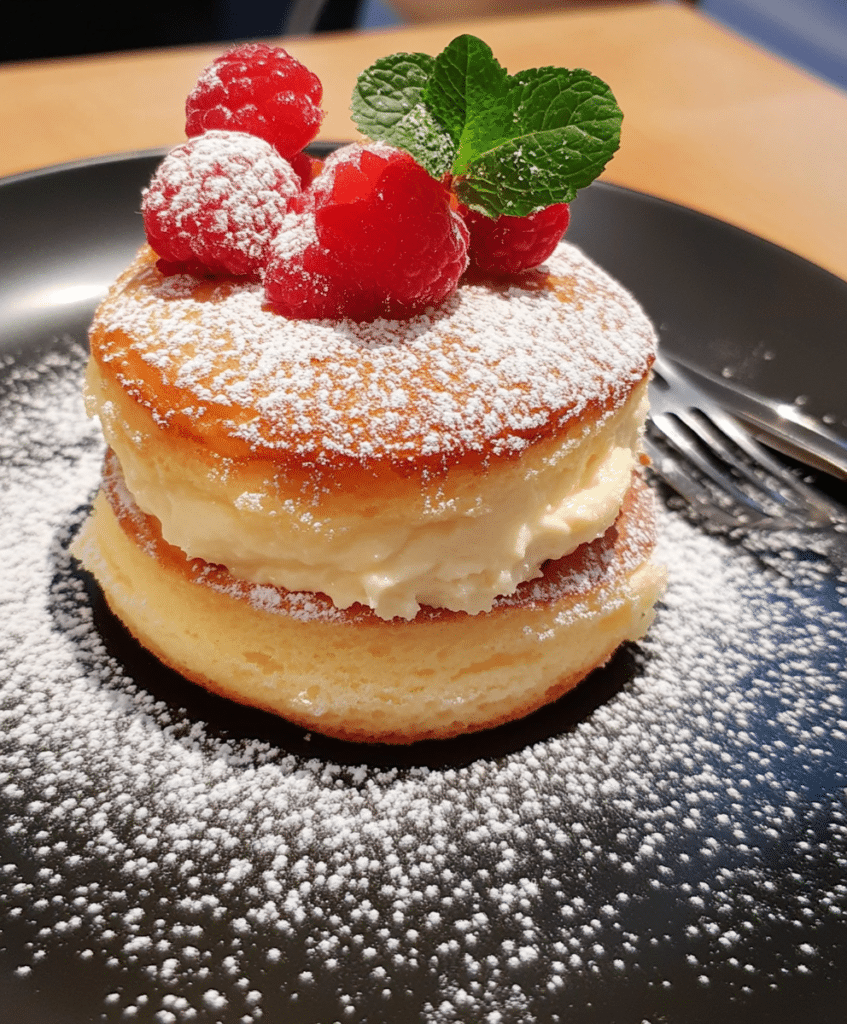
What Is a Japanese Soufflé Pancake Sando?
A Japanese soufflé pancake sando is a modern dessert-style sandwich made by placing a creamy or fruity filling between two Japanese soufflé pancakes.
The word sando is commonly used in Japan for sandwiches. In this recipe, however, you’re not working with bread. Your two fluffy pancakes act as the sandwich layers.
The basic structure is simple:
- One Japanese soufflé pancake
- Sweet whipped cream
- Fresh fruit or another filling
- A second soufflé pancake
You can leave the sides rustic or pipe the cream neatly for a café-inspired presentation.
What Makes Japanese Soufflé Pancakes Different?
The major difference is the egg-white meringue.
Traditional pancakes generally achieve most of their lift through chemical leaveners such as baking powder. Japanese soufflé pancakes rely heavily on air incorporated into whipped egg whites.
When you fold that meringue into your yolk-and-flour batter, millions of tiny air pockets remain trapped inside. Gentle cooking allows those pockets to expand while the egg and flour proteins gradually set around them.
That creates the characteristic tall, airy structure.
Japanese Soufflé Pancakes vs. Regular Pancakes
| Japanese Soufflé Pancakes | Regular Pancakes |
|---|---|
| Tall and airy | Relatively flat |
| Meringue-based | Mostly baking-powder based |
| Delicate interior | Cake-like crumb |
| Slow, gentle cooking | Faster cooking |
| Often covered while cooking | Usually cooked uncovered |
| Best enjoyed immediately | Hold reasonably well |
The soufflé version requires more technique, but you are rewarded with a completely different texture.
Why You’ll Love This Japanese Soufflé Pancake Sando
This recipe is ideal when you want breakfast or dessert to feel a little special.
You’ll love it because it gives you:
- Incredibly fluffy pancakes
- Light creamy filling
- Fresh-fruit options
- Beautiful presentation
- Plenty of flavor variations
- A café-style brunch experience
- Individual portions
- Sweet but balanced flavor
You can also customize almost every part of the recipe.
Keep it classic with strawberries and cream, add matcha for a distinctly Japanese-inspired flavor, use mango for something tropical, or pair Nutella with banana when you want a richer dessert.
Ingredients for Best Japanese Soufflé Pancake Sando
Soufflé Pancake Ingredients
| Ingredient | Amount | Purpose |
|---|---|---|
| Large eggs | 3 | Creates structure and meringue |
| Whole milk | 2 tbsp | Adds moisture |
| Vanilla extract | 1 tsp | Adds aroma |
| Cake flour | ½ cup | Creates tender texture |
| Baking powder | ½ tsp | Adds additional lift |
| Granulated sugar | 3 tbsp | Sweetens and stabilizes meringue |
| Lemon juice or cream of tartar | ½ tsp | Supports meringue stability |
| Neutral oil | As needed | Greases skillet |
Strawberry Cream Filling
| Ingredient | Amount | Purpose |
|---|---|---|
| Heavy whipping cream | 1 cup | Main creamy filling |
| Powdered sugar | 2–3 tbsp | Sweetness |
| Vanilla extract | ½ tsp | Flavor |
| Mascarpone | 2–3 tbsp, optional | Adds richness and stability |
| Fresh strawberries | 1 cup | Fruit filling |
Why Use Cake Flour?
Cake flour has a relatively low protein content, which makes it particularly useful when you’re aiming for a delicate pancake.
You don’t want the pancake structure to become chewy or bread-like.
If you only have all-purpose flour, you can still make soufflé pancakes, although the texture may be slightly firmer.
The Secret to Fluffy Soufflé Pancakes: Meringue
Your meringue is the heart of this recipe.
If it isn’t whipped sufficiently, the batter won’t hold enough air.
If it is overwhipped, it can become dry and difficult to incorporate.
If you fold too aggressively, you’ll knock out the air you worked so hard to create.
Separate the Eggs Carefully
Separate your egg yolks from your whites.
Place the whites in a perfectly clean, dry bowl.
Even a small amount of egg yolk or grease can interfere with proper whipping because fat destabilizes the foam you’re trying to create.
An Easy Trick for Separating Eggs
Separate each egg over a small bowl first, then transfer the clean white into your larger mixing bowl.
That way, one accidentally broken yolk doesn’t contaminate all your whites.
How to Make Stable Meringue
Step 1: Start Whipping Slowly
Beat your egg whites until they become foamy.
They should look like fine soap bubbles rather than transparent liquid.
Add the lemon juice or cream of tartar.
Step 2: Add Sugar Gradually
Don’t dump all your sugar into the whites at once.
Add it in two or three stages while continuing to beat.
Gradual addition gives the sugar time to dissolve while supporting a stable, glossy foam.
Step 3: Whip to Firm, Glossy Peaks
Continue until the meringue forms firm peaks.
When you lift the beaters, a peak should stand rather than immediately collapsing.
However, the meringue should still look smooth and glossy.
Don’t Overwhip Your Meringue
If the whites begin looking dry, chunky, or grainy, you’ve gone too far.
Overwhipped meringue doesn’t fold easily into batter and can break into small lumps.
How to Make Japanese Soufflé Pancake Batter
Step 1: Prepare the Egg-Yolk Mixture
Place your egg yolks in another bowl.
Add:
- Milk
- Vanilla extract
Whisk until smooth.
Step 2: Add the Dry Ingredients
Sift the cake flour and baking powder into your yolk mixture.
Whisk gently until the flour disappears.
Don’t continue beating unnecessarily once the mixture looks smooth.
Why Sift the Flour?
Sifting helps break apart flour lumps.
Because this batter needs gentle handling later, starting with finely aerated flour makes incorporation easier.
How to Fold Meringue Without Losing the Air
This is one of the most important parts of the recipe.
Start by adding approximately one-third of your meringue to the yolk batter.
At this stage, you can mix slightly more confidently because your goal is to lighten the thick yolk mixture.
Then add the remaining meringue in two batches.
Use a Folding Motion
Slide your spatula down through the middle of the batter.
Sweep along the bottom of the bowl.
Lift the mixture over the top.
Rotate the bowl slightly.
Repeat.
You want the batter to become uniform without stirring it aggressively.
When Should You Stop?
Stop as soon as you no longer see obvious large streaks of egg white.
The finished batter should look:
- Thick
- Airy
- Smooth
- Light
- Spoonable
Don’t keep folding in pursuit of absolute perfection. Every extra motion removes some air.
How to Cook Best Japanese Soufflé Pancakes
Step 1: Heat the Skillet Gently
Place a good-quality nonstick skillet over low heat.
Lightly grease it with neutral oil, then wipe away excessive oil with paper towel.
You don’t want the pancakes swimming in fat.
Why Low Heat Matters
Soufflé pancakes are tall.
If you use medium-high heat like you might for ordinary pancakes, the outside can brown long before the center sets.
Gentle heat gives warmth enough time to reach the middle.
Step 2: Shape Tall Pancakes
You can spoon the batter directly into the skillet or transfer it to a piping bag.
Create several small, tall mounds.
Don’t spread them flat.
Leave plenty of space between each one.
Build Them in Layers
For extra height, place one mound of batter down first.
Wait briefly, then spoon another portion directly on top.
This helps create the dramatic tall shape associated with soufflé pancakes.
Step 3: Add Steam and Cover
Add a small amount of water to an empty part of the skillet, making sure the water doesn’t touch your pancakes.
Immediately cover with a lid.
The trapped steam helps create a humid cooking environment while the pancake center sets.
Keep the heat low.
Step 4: Flip Carefully
After several minutes, check the bottom.
The pancake should be lightly golden and firm enough that you can slide a broad spatula underneath it.
Flip carefully.
Don’t rush this step.
If the pancake still feels very fragile, give it more time.
Why Soufflé Pancakes Collapse During Flipping
Common reasons include:
- Bottom isn’t fully set.
- Meringue was weak.
- Batter was overfolded.
- Pancakes are too large.
- Flip is too aggressive.
Use a wide spatula and confident but gentle movement.
Step 5: Finish the Second Side
Add another small splash of water away from the pancakes.
Cover again.
Continue cooking slowly until the second side is lightly golden and the center feels springy.
How Do You Know They’re Cooked?
The pancakes should:
- Feel light and springy
- Hold their shape
- Have lightly browned surfaces
- No longer appear wet in the center
Avoid cutting one open immediately if possible, because you’ll lose some structure.
How to Make the Cream Filling
While your pancakes cool slightly, prepare the filling.
Pour cold heavy whipping cream into a clean bowl.
Add powdered sugar and vanilla.
Whip until medium-to-stiff peaks form.
You need a firmer cream than you might use for topping a dessert because it has to support another pancake.
Add Mascarpone for Stability
If you want a richer and more stable filling, gently incorporate 2–3 tablespoons of mascarpone.
This is particularly useful when you are preparing the sando for photographs or serving it a little later.
Don’t Overwhip the Cream
Stop once it holds firm swirls.
If you keep beating after that point, the cream becomes grainy and can eventually separate into butter.
How to Assemble Japanese Soufflé Pancake Sando
Step 1: Let the Pancakes Cool Slightly
Don’t put whipped cream between pancakes straight from the pan.
The residual heat can melt your filling.
You want them slightly warm or cooled to room temperature.
Step 2: Add the Cream
Place one pancake on your plate.
Pipe or spoon whipped cream over the center.
Leave a small border.
Step 3: Add Fresh Strawberries
Slice your strawberries and pat them dry.
Arrange them over the cream.
Moist fruit can make the sandwich slippery, so don’t skip the drying step.
Step 4: Add the Second Pancake
Carefully place another pancake on top.
Press only enough to stabilize the sandwich.
You don’t want to compress that beautiful airy structure.
Strawberry Soufflé Pancake Sando
Strawberries and cream are perhaps the easiest combination to start with.
The berries provide acidity that balances the soft sweetness of the pancake and cream.
For an attractive presentation, slice one strawberry lengthwise and position it near the visible edge of the filling.
Finish with:
- Powdered sugar
- Additional berries
- Small mint leaves
Matcha Soufflé Pancake Sando
For a green-tea variation, add matcha to your whipped cream.
Start with about 1 teaspoon of good-quality matcha powder per cup of cream.
Sift it first to avoid lumps.
Matcha’s gentle bitterness contrasts beautifully with sweet cream.
You can pair matcha cream with:
- Strawberries
- White chocolate
- Red bean paste
Mango Cream Pancake Sando
For a tropical version, use ripe mango.
Cut mango into thin pieces and layer them between whipped cream and pancakes.
The soft texture makes mango particularly easy to sandwich.
A little lime zest in your cream can brighten this version.
Nutella Soufflé Pancake Sando
When you’re in the mood for something richer, spread a thin layer of Nutella on one pancake.
Add:
- Whipped cream
- Banana
or
- Whipped cream
- Strawberries
Use Nutella sparingly. A thick layer can overwhelm the delicate pancake texture.
Chocolate Soufflé Pancake Sando
You can add a small amount of cocoa powder to the pancake batter or use chocolate-flavored whipped cream.
Chocolate pairs beautifully with:
- Strawberries
- Bananas
- Raspberries
Finish with a light dusting of cocoa rather than a heavy sauce if you want to preserve the elegant appearance.
Japanese Custard Pancake Sando
Instead of whipped cream, you can fill your sando with thick vanilla pastry cream.
Make sure the custard is completely cold before assembly.
Fresh strawberries work particularly well alongside it.
Common Japanese Soufflé Pancake Problems
Why Did My Pancakes Collapse?
A little deflation is completely normal.
These pancakes rely on air trapped inside meringue, so they will lose some height as they cool.
Significant collapse, however, may indicate:
- Underwhipped meringue
- Overfolded batter
- Undercooking
- Heat too low to set structure
- Pancakes made too large
Why Are My Pancakes Dense?
You probably lost too much air.
Common causes include:
- Aggressive folding
- Weak meringue
- Batter left sitting too long
Cook your pancakes as soon as your batter is ready.
Why Are They Brown Outside but Raw Inside?
Your skillet is too hot.
Turn the heat down and allow more time.
Soufflé pancakes require patience.
Why Didn’t They Rise?
Check your meringue.
It should be able to hold firm peaks before being folded into the yolk mixture.
Also make sure you’re not stirring the finished batter.
Why Are My Pancakes Dry?
You may have cooked them for too long.
Once the center is properly set, remove them from heat.
Expert Tips for the Best Japanese Soufflé Pancake Sando
Remember these key points:
- Separate eggs carefully.
- Use a completely clean bowl.
- Add sugar gradually.
- Whip meringue until glossy.
- Don’t overwhip.
- Fold gently.
- Cook the batter immediately.
- Keep the skillet on low heat.
- Cover during cooking.
- Use gentle steam.
- Flip only when the bottom is stable.
- Cool before adding cream.
- Don’t overfill the sandwich.
- Serve soon after assembly.
What to Serve With Japanese Soufflé Pancake Sando
These sandos can work as brunch or dessert.
For drinks, try:
- Matcha latte
- Japanese-style iced coffee
- Green tea
- Milk tea
- Strawberry milk
- Hot coffee
For a larger brunch, serve alongside:
- Fresh berries
- Fruit salad
- Yogurt
- Berry compote
Café-Style Presentation
Keep your plating simple.
Place one pancake sando in the center of a clean plate.
Add:
- A few strawberries
- Light powdered sugar
- Tiny mint sprig
The height of the pancake already provides plenty of visual impact.
Can You Make Soufflé Pancake Batter Ahead?
No, not ideally.
Once you fold meringue into the batter, it begins losing air.
The longer it sits, the less volume you’ll have.
Prepare the batter immediately before cooking.
What Can You Prepare Ahead?
You can make several other components ahead.
Prepare:
- Whipped cream
- Mascarpone filling
- Sliced fruit
- Matcha cream
- Custard
Keep everything covered and refrigerated until needed.
Cook the pancakes shortly before assembling.
How to Store Japanese Soufflé Pancakes
Soufflé pancakes are best fresh.
If necessary, let plain pancakes cool completely and refrigerate them in an airtight container.
They will lose some height, but they can still taste good.
What About Assembled Sandos?
Because the filling contains whipped cream and possibly fresh fruit, assembled sandos need refrigeration.
However, refrigeration gradually changes the pancake texture.
For the best experience, assemble and serve them relatively soon after cooking.
Can You Freeze Japanese Soufflé Pancakes?
Plain pancakes can be frozen, although their texture may change.
Cool them completely and wrap them individually.
Thaw before gently reheating.
Avoid freezing fully assembled sandos with whipped cream and fresh fruit. The filling and fruit may become watery after thawing.
Approximate Nutrition Information
Nutrition depends heavily on pancake size, cream quantity, and chosen fillings.
| Nutrient | Approximate Amount Per Sando |
|---|---|
| Calories | 320–450 kcal |
| Protein | 8–12 g |
| Carbohydrates | 35–50 g |
| Fat | 18–28 g |
| Sugar | 18–28 g |
Adding Nutella, custard, chocolate, or larger quantities of cream will increase these values.
Frequently Asked Questions About Best Japanese Soufflé Pancake Sando
What Is a Japanese Soufflé Pancake Sando?
It’s a dessert-style sandwich made with two fluffy Japanese soufflé pancakes and a filling such as whipped cream, fruit, matcha cream, chocolate, or custard.
Why Are Japanese Soufflé Pancakes So Fluffy?
Their signature texture comes primarily from whipped egg whites folded into the pancake batter.
Can I Make Best Japanese Soufflé Pancake Sando Without Pancake Rings?
Yes. Pancake rings aren’t essential. You can spoon or pipe tall mounds of batter directly into a nonstick skillet.
Why Do Japanese Soufflé Pancakes Collapse?
Some deflation is natural. Excessive collapse can result from weak meringue, aggressive folding, or insufficient cooking.
Can I Make the Batter Ahead?
No. For maximum height, cook your batter immediately after folding in the meringue.
What Filling Works Best?
Fresh strawberries with lightly sweetened whipped cream are one of the easiest and most balanced combinations.
Can I Use Matcha?
Yes. Add sifted matcha powder to the whipped cream or carefully incorporate a small quantity into the pancake batter.
Can I Use Nutella?
Yes. Nutella works especially well with strawberries or bananas. Use a thin layer so it doesn’t overpower the delicate pancakes.
Do Japanese Soufflé Pancakes Need Baking Powder?
You can use a small amount for additional lift, but whipped egg-white meringue is primarily responsible for their characteristic height.
Can I Freeze Japanese Soufflé Pancake Sando?
It’s better to freeze only the plain pancakes. Fresh cream and fruit fillings are best added after thawing.
Conclusion: A Cloud-Like Pancake Sandwich Worth Mastering
The Best Japanese Soufflé Pancake Sando takes everything that makes Japanese soufflé pancakes memorable—their tall shape, soft center, and airy texture—and turns it into an irresistible dessert sandwich.
Once you understand the meringue technique, the recipe becomes much less intimidating. Whip your egg whites until firm and glossy, fold gently, cook immediately, keep your skillet heat low, use a little steam, and give the center enough time to set before flipping.
Then comes the fun part: choosing your filling.
Start with strawberries and cream for an easy classic. After that, experiment with matcha cream, mango, vanilla custard, chocolate, or Nutella and banana.
Most importantly, enjoy these pancakes while they’re fresh. Their cloud-like structure is at its very best shortly after cooking.
Make this Japanese Soufflé Pancake Sando for your next weekend brunch or dessert night, then leave a comment sharing which filling you chose. Save the recipe for later, and share it with someone who would happily eat a cloud if it came filled with strawberries and cream.