
A great meal does not always need complicated techniques or hours in the kitchen. Sometimes, the most memorable food comes from bringing simple ingredients together in just the right way. Korean Classic Bibimbap is a perfect example.
At first glance, your bibimbap bowl looks almost too beautiful to disturb. Warm rice sits beneath neat sections of colorful carrots, zucchini, spinach, mushrooms, bean sprouts, seasoned beef, and a golden egg. Then comes the best part: you add a spoonful of spicy-sweet gochujang sauce and mix everything together.
In fact, the name reflects exactly what you’re about to do: bibim refers to mixing, while bap means rice. Bibimbap is broadly characterized by rice mixed with assorted vegetables and often meat, egg, and a flavorful sauce.
This Best Korean Classic Bibimbap recipe gives you an approachable way to recreate that experience at home. You can keep it traditional in spirit, adapt the toppings to what you have, control the spice level, and prepare several components ahead for easier meals later in the week.
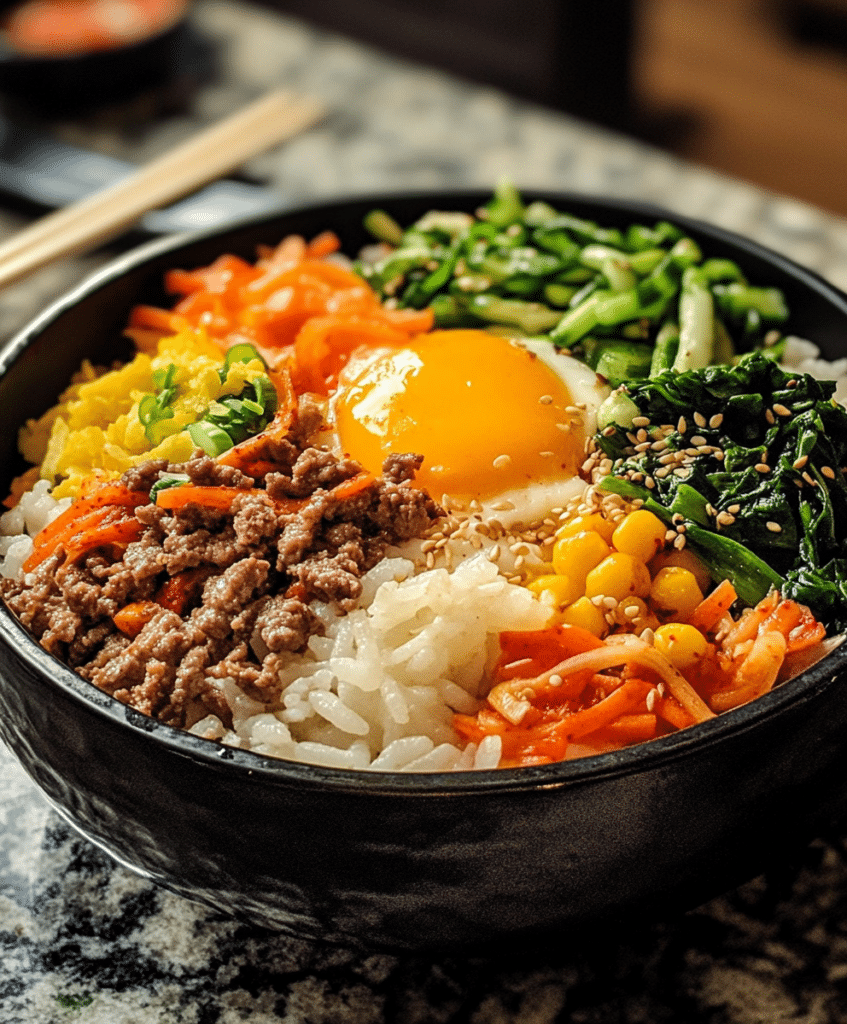
What Is Korean Classic Bibimbap?
Bibimbap is one of Korea’s best-known rice dishes. At its heart, it combines cooked rice with individually prepared toppings that are arranged over the rice before everything is mixed together.
The exact toppings can vary considerably. Korean culinary references describe versions containing seasoned vegetables, meat, egg, and gochujang, while regional interpretations can use different vegetables and sauces.
What Makes Bibimbap So Special?
The appeal comes from contrast. In a single bowl, you can experience:
- Warm, slightly sticky rice
- Crisp-tender vegetables
- Savory seasoned beef
- Earthy mushrooms
- Nutty sesame oil
- Rich egg yolk
- Spicy and slightly sweet gochujang sauce
You prepare many of these ingredients separately, so they keep their individual character. Only when you’re ready to eat do you mix them into one flavorful bowl.
A Brief Look at Bibimbap’s History
You may encounter several stories about where bibimbap originated. Some link it with agricultural meals, ancestral rites, royal cuisine, or using leftover side dishes. However, food-history research cautions that the precise origin remains uncertain and that several popular origin stories lack decisive evidence.
That uncertainty doesn’t diminish bibimbap’s cultural significance. Today, numerous regional and contemporary styles exist, with Jeonju bibimbap among the most recognized versions.
Why You’ll Love This Korean Classic Bibimbap Recipe
Bibimbap gives you variety without requiring a complicated finished dish. Once your individual toppings are prepared, assembly takes only a few minutes.
You’ll especially appreciate this recipe because it is:
- Customizable: Change vegetables and protein according to your preferences.
- Colorful: The separate toppings create a striking presentation.
- Flavor-packed: Gochujang, sesame oil, garlic, and soy sauce provide plenty of character.
- Meal-prep friendly: Several components can be prepared ahead.
- Adjustable: You control exactly how much spicy sauce goes into your bowl.
Rice is a central grain in Korean cuisine, while vegetables, sprouts, fermented seasonings, and other toppings allow dishes such as bibimbap to incorporate a broad range of ingredients.
Ingredients for Best Korean Classic Bibimbap
The ingredient list may look long, but most ingredients require only quick preparation.
Korean Classic Bibimbap Ingredients
| Ingredient | Quantity | Purpose |
|---|---|---|
| Short-grain white rice | 2 cups cooked | Base of the bowl |
| Ground or thinly sliced beef | 8 oz | Savory protein |
| Carrot | 1 medium | Julienned |
| Zucchini | 1 medium | Thinly sliced |
| Fresh spinach | 2 cups | Blanched and seasoned |
| Bean sprouts | 1½ cups | Fresh, crisp texture |
| Shiitake mushrooms | 1 cup | Sliced |
| Eggs | 4 | One per serving |
| Sesame oil | 2 tbsp | Nutty flavor |
| Soy sauce | 2 tbsp | Seasoning |
| Garlic | 2–3 cloves | Minced |
| Sesame seeds | 1–2 tbsp | Garnish |
| Green onions | 2 | Thinly sliced |
| Neutral cooking oil | As needed | For sautéing |
Homemade Bibimbap Sauce
| Ingredient | Quantity | Purpose |
|---|---|---|
| Gochujang | 3 tbsp | Spicy fermented base |
| Sesame oil | 1 tbsp | Nutty richness |
| Rice vinegar | 1 tbsp | Acidity |
| Honey or sugar | 1 tbsp | Balances heat |
| Soy sauce | 1 tsp | Savory depth |
| Garlic | 1 small clove | Aromatic flavor |
| Sesame seeds | 1 tsp | Optional finish |
Gochujang is powerful, so you don’t need to drown your rice in sauce. Start modestly; you can always add more after mixing.
Choosing the Best Rice for Korean Classic Bibimbap
Rice isn’t merely filler here. It’s the foundation that holds every topping together.
Why Short-Grain Rice Works So Well
Short-grain rice gives you a pleasantly tender, slightly sticky consistency. The grains hold together enough to catch the sauce and vegetables as you mix your bowl.
Prepare your rice shortly before serving and keep it warm.
Can You Use Brown Rice?
Yes. Brown rice creates a nuttier flavor and chewier texture.
It won’t give you exactly the same experience as white short-grain rice, but it’s a useful variation when that’s the grain you prefer.
Best Vegetables for Korean Classic Bibimbap
Traditional and regional bibimbap toppings vary, so there isn’t one universal vegetable combination. Korea’s tourism authority notes that commonly encountered toppings can include seasoned vegetables such as sprouts and other greens alongside beef.
For an accessible homemade bowl, try:
- Carrots
- Zucchini
- Spinach
- Bean sprouts
- Shiitake mushrooms
Why You Should Cook the Vegetables Separately
Throwing everything into one skillet is tempting, but separate preparation gives you better control.
Your carrots can remain slightly crisp. Your spinach stays tender. Your mushrooms can brown properly without being surrounded by water released from zucchini.
Don’t Overcook Your Vegetables
Bibimbap becomes more interesting when each topping has a distinctive texture. Cook the vegetables just enough to make them tender while retaining their character.
How to Prepare Beef for Korean Classic Bibimbap
Both ground beef and thinly sliced beef are practical choices.
Easy Korean-Style Beef Seasoning
Combine your beef with:
- Soy sauce
- Sesame oil
- Minced garlic
- Chopped green onion
- A small amount of honey or sugar
- Black pepper
Let it sit briefly while you prepare the other toppings.
Ground Beef vs Thinly Sliced Beef
Ground beef is especially convenient when you want a quick weeknight bibimbap. It browns quickly and mixes easily through the rice.
Thinly sliced beef gives you more distinct pieces and an attractive presentation.
If you’re using ground beef, cook it to an internal temperature of 160°F (71.1°C) as measured with a food thermometer, following USDA guidance.
How to Make the Best Korean Classic Bibimbap
Prepare everything before you start assembling. Once your rice, vegetables, beef, sauce, and eggs are ready, building each bowl becomes easy.
Step-by-Step Korean Bibimbap Recipe
Step 1 – Cook Your Rice
Rinse the rice and cook it according to the package directions or your rice cooker’s instructions.
Once cooked, keep it covered and warm.
Step 2 – Prepare the Spinach
Blanch the spinach briefly, then cool and gently squeeze away excess moisture.
Season it lightly with sesame oil, garlic, and a pinch of salt.
Step 3 – Prepare the Bean Sprouts
Cook or blanch the bean sprouts until tender while retaining some crunch.
Drain thoroughly and season lightly.
Step 4 – Sauté the Carrots and Zucchini
Heat a small amount of neutral oil in your skillet.
Cook the carrots briefly until crisp-tender. Remove them, then cook the zucchini separately.
Keeping them separate preserves their colors and textures.
Step 5 – Cook the Mushrooms
Add your sliced mushrooms to the skillet and sauté until tender and lightly browned.
A touch of soy sauce can add extra savory flavor.
Step 6 – Cook the Beef
Heat your skillet over medium-high heat and add the seasoned beef.
Cook until thoroughly done and nicely browned. Break ground beef into small pieces as it cooks.
Remove from the heat and keep warm.
Step 7 – Make Your Bibimbap Sauce
In a small bowl, combine:
- Gochujang
- Sesame oil
- Rice vinegar
- Honey or sugar
- Soy sauce
- Garlic
- Sesame seeds
Stir until smooth.
Taste before adding additional gochujang. Your sauce should have a lively balance of heat, sweetness, acidity, and savory flavor.
Step 8 – Fry the Eggs
Cook one egg for each bowl.
You can leave the yolk soft if that’s how you enjoy it, or cook it more thoroughly according to your preference.
Step 9 – Assemble Your Korean Classic Bibimbap
Divide the warm rice among four bowls.
Arrange your toppings in sections over the rice:
- Spinach
- Carrots
- Zucchini
- Mushrooms
- Bean sprouts
- Beef
Place an egg in the middle and sprinkle sesame seeds and green onions over the top.
Step 10 – Mix and Enjoy
Add a spoonful of bibimbap sauce.
Now mix.
Don’t just stir the surface. Turn everything thoroughly so your rice gets coated with sauce, egg, sesame oil, vegetables, and beef. Mixing is fundamental to the dish itself.
How to Make Bibimbap Less Spicy
Gochujang gives your Korean rice bowl its distinctive red color and fermented chili flavor, but you control the quantity.
If you’re sensitive to heat:
- Begin with one teaspoon of sauce.
- Mix completely before deciding whether you need more.
- Increase the sweet component slightly if desired.
- Serve additional sauce at the table rather than adding everything immediately.
Not every bibimbap must be intensely spicy. Variations using soy sauce or fermented soybean-based sauces also exist.
Expert Tips for the Best Korean Classic Bibimbap
A few simple habits can dramatically improve your finished bowl:
- Have your vegetables sliced before cooking.
- Prepare each vegetable separately.
- Drain blanched vegetables well.
- Keep your rice warm.
- Don’t oversalt the toppings because soy sauce and gochujang already contribute seasoning.
- Add the sauce gradually.
- Use sesame oil as a flavoring rather than ordinary frying oil.
- Serve soon after assembly.
- Mix thoroughly before eating.
Common Bibimbap Mistakes
One of the easiest mistakes is leaving too much water in your vegetables. That moisture can dilute your sauce and make your rice soggy.
Another is over-seasoning every individual component. Remember that everything eventually gets mixed together.
You want each ingredient seasoned, but the finished bowl needs balance.
Delicious Korean Classic Bibimbap Variations
Once you understand the basic structure, you can customize your bibimbap endlessly.
Chicken Bibimbap
Replace beef with sliced chicken.
Cook poultry to a minimum internal temperature of 165°F (73.9°C).
Vegetarian Bibimbap
Skip the meat and increase the mushrooms or add cooked tofu.
You can also introduce seasonal vegetables depending on what’s available.
Extra-Spicy Bibimbap
For more heat, increase the gochujang sauce or add Korean chili flakes according to taste.
Dolsot Bibimbap
Dolsot bibimbap takes the experience in another direction.
It’s served in a heated stone bowl, which can create a crispy rice layer where the rice meets the hot surface. Stone-pot bibimbap is a well-established variation of the dish.
What to Serve with Korean Classic Bibimbap
Bibimbap can easily stand alone as your meal, but simple accompaniments make dinner even more interesting.
Try serving it with:
- Kimchi
- Korean cucumber salad
- Pickled vegetables
- Light soup
- Additional vegetable side dishes
Keep your sides relatively simple. The bibimbap already provides plenty of flavors, colors, and textures.
How to Meal Prep Korean Classic Bibimbap
Bibimbap is particularly useful when you like preparing ingredients ahead rather than cooking a complete dinner from scratch every evening.
You can prepare your:
- Rice
- Cooked beef
- Spinach
- Carrots
- Zucchini
- Mushrooms
- Bean sprouts
- Sauce
Store the components separately and assemble when needed.
Preparing the egg fresh when serving gives you the best texture.
How to Store and Reheat Bibimbap
Promptly refrigerate cooked leftovers rather than leaving them sitting at room temperature. USDA guidance recommends refrigerating perishable leftovers within two hours and using refrigerated leftovers within 3–4 days.
Keep the sauce and cooked components in suitable covered containers.
When you’re ready to eat, reheat the cooked rice and beef thoroughly. USDA recommends reheating leftovers to 165°F (73.9°C).
Then add your sauce and freshly prepared egg.
Nutritional Benefits of Korean Classic Bibimbap
One reason bibimbap can work so well as a meal is the variety you can fit into one bowl.
Depending on your recipe, you’re getting:
- Protein from beef and egg
- Carbohydrates from rice
- Fiber and micronutrients from vegetables
- Fat and flavor from sesame oil
Korea’s tourism authority similarly highlights bibimbap’s combination of vegetables and meat as providing nutrients such as protein, minerals, and fiber.
Of course, the exact nutritional profile depends on your portion sizes, toppings, protein choice, and amount of sauce.
Frequently Asked Questions About Best Korean Classic Bibimbap
What is Korean Classic Bibimbap made of?
A typical bibimbap combines cooked rice with assorted seasoned vegetables and may include beef, egg, sesame oil, and a gochujang-based sauce. Recipes vary by region and household.
Do you mix Korean Classic Bibimbap before eating?
Yes. Mixing is central to the dish. Stir the rice, vegetables, protein, egg, and sauce thoroughly so you get several flavors and textures in every bite.
Is Korean Classic Bibimbap very spicy?
It doesn’t have to be. You determine much of the heat by controlling how much gochujang sauce you add.
Can you make Korean Classic Bibimbap without beef?
Absolutely. You can use chicken, tofu, mushrooms, or additional vegetables.
Can Korean Classic Bibimbap be prepared ahead?
Yes. Prepare the individual cooked components ahead, refrigerate them promptly, and assemble your bowl when you’re ready to eat.
What’s the difference between bibimbap and dolsot bibimbap?
Both are mixed-rice dishes, but dolsot bibimbap is served in a heated stone bowl. The hot surface can toast the rice at the bottom, producing the crispy texture that makes this variation distinctive.
Conclusion – Make the Best Korean Classic Bibimbap at Home
Korean Classic Bibimbap is much more than rice topped with vegetables. Its appeal comes from how dramatically the meal changes when you mix everything together. What begins as carefully separated ingredients becomes a colorful combination of warm rice, savory beef, tender vegetables, sesame, egg, and spicy-sweet sauce.
And that’s part of what makes bibimbap such a useful recipe for your kitchen. You don’t have to prepare the exact same bowl every time. Change the vegetables with the seasons. Swap beef for chicken or tofu. Make the sauce mild one evening and fiery the next.
Once you’ve learned the basic preparation, your homemade bibimbap can become an easy way to transform everyday ingredients into an exciting dinner.
Now it’s your turn: make this Best Korean Classic Bibimbap, mix that beautiful bowl, and tell us how you customized yours. Leave a comment with your favorite topping, rate the recipe after you try it, and save or share it so you can come back whenever you’re craving an easy Korean-inspired rice bowl.