
There is something comforting about turning a few quiet minutes into a small daily ritual. You sift a spoonful of vibrant green matcha into your cup, whisk it until smooth and frothy, then pour in warm, creamy milk. Within minutes, you have a drink that looks beautiful and feels a little more special than your usual morning beverage.
This Best Matcha Latte Green Tea Powder recipe gives you that café-style experience without leaving home. The flavor is earthy and slightly vegetal, balanced by creamy milk and just enough sweetness to soften matcha’s natural bitterness.
Better still, you control everything. You can make your matcha latte hot or iced, sweet or barely sweetened, rich with whole milk or completely dairy-free with oat, almond, soy, or coconut milk.
Matcha is a powdered form of green tea made from Camellia sinensis. Unlike ordinary steeped tea, the powder is whisked directly into liquid, so you consume the powdered tea itself. (Harvard Health)
If you’re ready to make a smoother homemade matcha latte, this recipe walks you through every step.
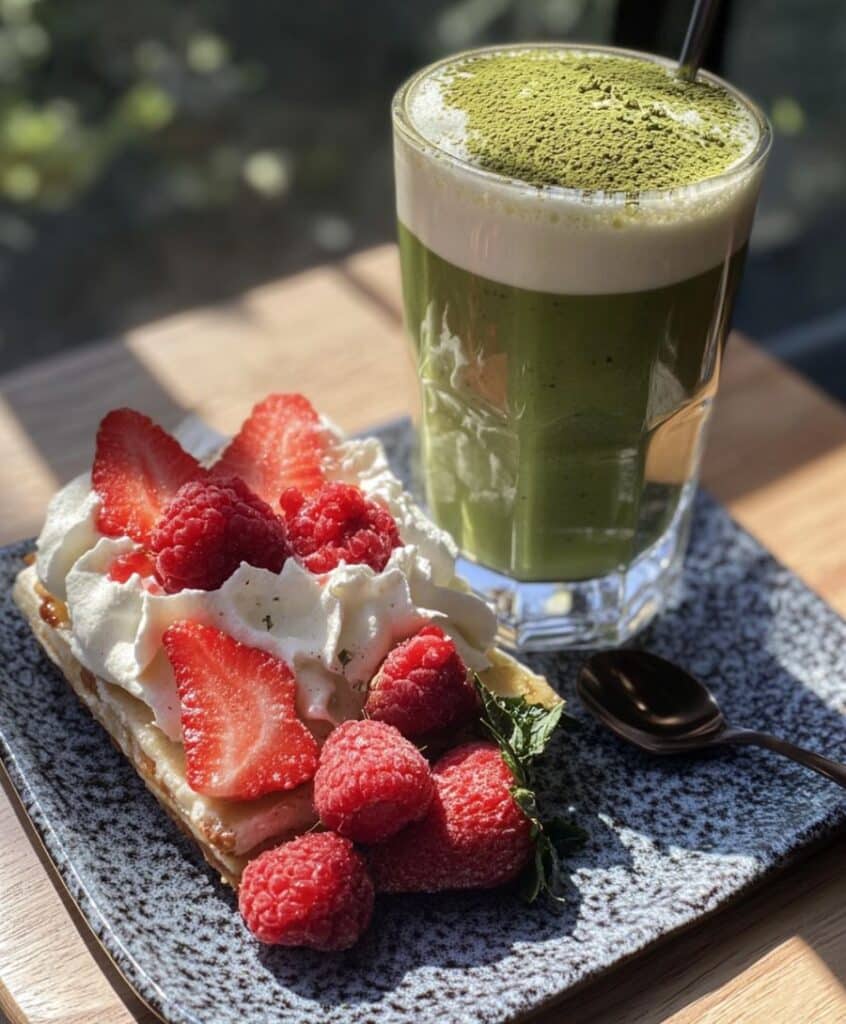
What Is a Matcha Latte?
A matcha latte combines matcha green tea powder, a small quantity of hot water, milk, and optional sweetener.
Traditional matcha preparation does not require milk. For a latte, however, steamed or cold milk is added to create a creamier and milder drink.
Matcha comes from the same tea plant used for other traditional teas, but it is prepared as a fine powder rather than steeped and discarded. (The Nutrition Source)
What Does a Matcha Latte Taste Like?
If you’re trying matcha for the first time, expect a flavor that can be:
- Earthy
- Vegetal
- Slightly bitter
- Grassy
- Smooth
- Creamy when milk is added
- Mildly sweet when sweetened
Quality, quantity, water temperature, milk, and sweetener all influence the final flavor.
Matcha Latte vs. Regular Green Tea
| Matcha Latte | Regular Green Tea |
|---|---|
| Uses powdered green tea | Uses steeped tea leaves |
| Powder remains in drink | Leaves are usually removed |
| Rich, concentrated flavor | Lighter flavor |
| Usually contains milk | Commonly served without milk |
| Creamy texture | Light, tea-like texture |
| Whisked | Steeped |
Because matcha is more concentrated, it can also contain more caffeine than standard brewed green tea. Harvard Health reports a broad range of approximately 38–89 mg of caffeine per 8-ounce matcha serving, compared with about 23–49 mg for green tea; actual amounts depend on the product and preparation. (Harvard Health)
Why You’ll Love This Easy Matcha Latte Green Tea Powder Recipe
Making your own matcha latte gives you much more control than buying a premixed drink.
You’ll love this recipe because it is:
- Ready in minutes
- Easy for beginners
- Customizable
- Delicious hot or iced
- Naturally colorful
- Easy to make dairy-free
- Adjustable in sweetness
- Suitable for different milk choices
- Easy to turn into flavored matcha drinks
You can also control added sugar. Instead of using a heavily sweetened premix, you decide whether your cup needs a teaspoon of honey, maple syrup, vanilla syrup, or no added sweetener at all.
Ingredients for the Best Matcha Latte Green Tea Powder
The basic recipe requires very few ingredients.
Matcha Latte Ingredients
| Ingredient | Amount | Purpose |
|---|---|---|
| Matcha green tea powder | 1–2 tsp | Main tea flavor |
| Hot water | 2–3 tbsp | Helps whisk matcha |
| Milk | 1 cup | Creates creamy latte |
| Honey, maple syrup or sugar | 1–2 tsp | Optional sweetness |
| Vanilla extract | ¼ tsp | Optional flavor |
This makes approximately one generous matcha latte.
Optional Additions
You can customize your cup with:
- Cinnamon
- Vanilla syrup
- Coconut milk
- Strawberry purée
- Maple syrup
- Honey
- Lavender syrup
- A pinch of ginger
Start with the basic version before adding several flavors. Good matcha already has plenty of character.
How to Choose Matcha Green Tea Powder
Your powder makes a noticeable difference in your finished drink.
Drinking-Quality Matcha
Matcha marketed for drinking typically aims for a smoother flavor, fine texture, and attractive green color.
This is particularly useful if you plan to drink your matcha with relatively little milk or sweetener.
Culinary Matcha
Culinary matcha generally has a stronger flavor designed to remain noticeable when combined with other ingredients.
It’s commonly used for:
- Lattes
- Smoothies
- Cakes
- Cookies
- Ice cream
- Other desserts
A good culinary matcha can therefore work perfectly well for a latte, especially if you enjoy a stronger matcha flavor.
What Should You Look For?
When buying matcha, consider:
- Fine powder
- Fresh aroma
- Appealing green color
- Airtight packaging
- Clear origin and ingredient labeling
- A product intended for your preferred use
You don’t necessarily need the most expensive matcha available to make a delicious latte.
How Much Matcha Should You Use?
Your ideal amount depends on how strong you like your drink.
Mild Matcha Latte
Start with:
1 teaspoon matcha + 1 cup milk
This produces a milder drink that is particularly approachable for beginners.
Strong Matcha Latte
Try:
1½–2 teaspoons matcha + 1 cup milk
This gives you a much more noticeable tea flavor.
Remember that increasing the powder also increases caffeine. Matcha’s caffeine content varies significantly, so check your product information if caffeine intake matters to you. (Harvard Health)
Best Water Temperature for Matcha
One of the easiest ways to improve homemade matcha is to stop pouring freshly boiling water directly over the powder.
Green tea is generally prepared at a lower temperature than black tea, and excessively hot water can emphasize bitter notes. Harvard’s Nutrition Source lists about 180°F as a general steeping temperature for green tea. (The Nutrition Source)
For your latte, you only need a few tablespoons of hot water.
Why Does Water Temperature Matter?
Your goal is to create a concentrated, smooth matcha base without unnecessarily emphasizing bitterness.
If you’ve been making matcha with boiling water and wondering why it tastes harsh, try slightly cooler water before adding more sweetener.
How to Make Matcha Without Clumps
Nobody wants little pockets of dry green powder floating through a creamy latte.
The solution starts before you whisk.
Step 1: Sift Your Matcha
Place your matcha through a small fine-mesh sieve.
Press it gently through the sieve into your bowl or cup.
This breaks apart compacted powder.
Step 2: Add Only a Little Water
Don’t immediately pour an entire cup of milk over dry matcha.
Instead, add two to three tablespoons of hot water.
Step 3: Whisk Thoroughly
Use a bamboo matcha whisk, small kitchen whisk, or handheld frother.
Whisk quickly until the mixture becomes smooth and lightly foamy.
What If You Don’t Have a Bamboo Whisk?
That’s completely fine.
A handheld electric milk frother is probably the easiest alternative for everyday latte preparation.
How to Make the Best Matcha Latte Green Tea Powder
Now you’re ready to make your drink.
Step 1: Sift the Matcha
Place 1–2 teaspoons matcha powder into a small bowl.
Sift thoroughly.
Step 2: Add Hot Water
Pour 2–3 tablespoons hot, but not vigorously boiling, water over the matcha.
Step 3: Whisk
Whisk rapidly until you have a smooth green mixture with no visible dry lumps.
A bamboo whisk works particularly well with a quick back-and-forth movement.
Step 4: Heat Your Milk
Warm 1 cup milk in a small saucepan or milk frother.
Don’t aggressively boil it.
You want your milk pleasantly hot and suitable for drinking.
Step 5: Froth
Froth your warm milk until it develops a creamy layer of foam.
You can use:
- Electric frother
- Handheld frother
- Steam wand
- French press
- Small whisk
Step 6: Sweeten Your Matcha
Stir honey, maple syrup, sugar, or vanilla syrup into your matcha concentrate.
Start with a small amount.
You can always add more.
Step 7: Add Milk
Slowly pour your warm milk into the matcha.
Spoon the remaining foam over the top.
Step 8: Serve
Finish with a tiny dusting of matcha powder if desired.
Your homemade matcha latte is ready.
How to Make an Iced Matcha Latte
When the weather is warm, the same ingredients make an excellent iced drink.
You’ll need:
- 1–2 teaspoons matcha
- 2–3 tablespoons warm water
- 1 cup cold milk
- Sweetener
- Ice
Iced Matcha Latte Instructions
- Sift your matcha into a small bowl.
- Add warm water.
- Whisk until completely smooth.
- Stir in sweetener.
- Fill a tall glass with ice.
- Pour in cold milk.
- Slowly pour the matcha over the milk.
- Stir before drinking.
How to Create Beautiful Matcha Layers
For a café-style presentation, add your ice and milk first.
Slowly pour the whisked matcha over the top.
You’ll get contrasting white and green layers.
Enjoy the appearance for a moment, then stir so the flavors combine properly.
Best Milk for a Matcha Latte
Your milk choice changes both flavor and texture.
Whole Milk
Whole milk produces a rich, creamy latte with a classic dairy flavor.
Oat Milk
Oat milk is one of the easiest dairy-free options for matcha.
Its naturally mild sweetness can complement the earthy tea flavor.
A barista-style oat milk may create better foam than some thinner varieties.
Almond Milk
Almond milk produces a lighter latte with a subtle nutty flavor.
Soy Milk
Soy milk can create a creamy drink and generally has a more substantial body than some plant-based alternatives.
Coconut Milk
Coconut milk gives your matcha a distinct tropical flavor.
Use it when you want coconut to be part of the drink rather than simply a milk substitute.
Best Sweeteners for Matcha Latte
You don’t necessarily need to sweeten good matcha.
But if you’re new to its earthy flavor, a little sweetness can make your latte more approachable.
Try:
- Honey
- Maple syrup
- Granulated sugar
- Brown sugar
- Vanilla syrup
How Much Sweetener?
Start with approximately one teaspoon.
Taste.
Then add more only if needed.
This is particularly useful because commercial matcha drinks can contain significant added sweeteners, while homemade preparation lets you control exactly what goes into your cup. Harvard nutrition experts similarly recommend limiting unnecessary added sweeteners in tea. (The Nutrition Source)
Easy Matcha Latte Variations
Once you’ve mastered the basic recipe, you can experiment.
Vanilla Matcha Latte
Add ¼ teaspoon vanilla extract or a little vanilla syrup.
The vanilla softens matcha’s earthy character without completely hiding it.
Honey Matcha Latte
Replace sugar with honey.
This creates a gentle floral sweetness.
Coconut Matcha Latte
Use coconut milk and serve hot or iced.
Strawberry Matcha Latte
Add strawberry purée to the bottom of your glass.
Layer with:
- Strawberry purée
- Ice
- Milk
- Whisked matcha
It’s particularly attractive served in a clear glass.
Cinnamon Matcha Latte
Add a small pinch of cinnamon to your milk.
Keep the amount subtle so the cinnamon doesn’t overpower the matcha.
Lavender Matcha Latte
A small amount of lavender syrup creates a floral café-style variation.
Common Matcha Latte Mistakes
Why Is My Matcha Clumpy?
You probably skipped sifting or added too much liquid at once.
Solution: Sift first and whisk with only a few tablespoons of water.
Why Does My Matcha Taste Bitter?
Possible reasons include:
- Too much matcha
- Water that is excessively hot
- Naturally stronger powder
- Too little milk
- Personal preference for a sweeter drink
Start by lowering the water temperature or reducing the powder slightly.
Why Is My Matcha Latte Too Weak?
Increase your matcha gradually.
Move from one teaspoon to 1½ teaspoons rather than immediately doubling it.
Why Is My Iced Matcha Watery?
Too much ice combined with warm ingredients can dilute your drink.
Use cold milk and only enough warm water to whisk the powder.
Why Does Matcha Settle?
Because you’re drinking finely powdered tea rather than a filtered infusion, some settling can occur.
Simply stir your drink again.
Does Matcha Contain Caffeine?
Yes.
This is important because matcha is sometimes mistakenly treated as caffeine-free.
Harvard Health reports approximately 38–89 mg caffeine per 8-ounce cup of matcha, though amounts vary. For comparison, the same source gives approximately 100–120 mg for an 8-ounce coffee. (Harvard Health)
If caffeine affects your sleep, consider enjoying your matcha earlier in the day. (Harvard Health)
Matcha also contains polyphenols, including catechins, although research into specific long-term health effects is still developing and shouldn’t be treated as proof that matcha prevents or cures disease. (Harvard Health)
How to Store Matcha Green Tea Powder
Freshness matters.
After opening your matcha:
- Keep the package tightly sealed.
- Protect it from excessive heat.
- Keep it away from direct sunlight.
- Avoid introducing moisture.
- Follow the manufacturer’s storage instructions.
Because matcha is finely powdered, its aroma and flavor can change with prolonged exposure to air.
Buy quantities you can reasonably use rather than leaving a large opened package sitting around for months.
Can You Make a Matcha Latte Ahead?
You can, particularly if you’re preparing an iced drink for a busy morning.
However, matcha is usually most attractive immediately after whisking.
If preparing ahead:
- Whisk matcha with water.
- Refrigerate in a sealed container.
- Keep milk separate.
- Combine when ready.
- Shake or stir thoroughly.
Don’t worry if some powder settles during storage.
What to Serve with a Matcha Latte
Matcha pairs beautifully with lightly sweet foods.
Try it with:
- Pancakes
- French toast
- Oatmeal
- Yogurt and fruit
- Shortbread
- Mochi
- Pound cake
- Butter cookies
- Fresh strawberries
- Blueberries
- Toast with nut butter
For an easy café-style breakfast, serve your homemade matcha latte with fresh berries and a warm pastry.
Approximate Nutrition Information
The nutritional profile depends much more on your milk and sweetener than on a small serving of matcha powder.
| Nutrient | Approximate Amount |
|---|---|
| Calories | 100–220 kcal |
| Protein | 3–9 g |
| Carbohydrates | 10–25 g |
| Fat | 2–9 g |
| Added sugar | Depends on sweetener |
| Caffeine | Varies by matcha and quantity |
For accurate nutrition information, calculate your specific milk, matcha brand, and sweetener.
Frequently Asked Questions About Best Matcha Latte Green Tea Powder
What Is Best Matcha Latte Green Tea Powder?
A matcha latte combines finely powdered matcha green tea with water, milk, and optional sweetener. You can serve it hot or iced.
What Matcha Is Best for a Latte?
Choose fresh, finely ground matcha with a flavor you enjoy. Drinking-quality matcha tends to be smoother, while a good culinary or latte-style matcha can offer stronger flavor at a lower cost.
Can You Make Matcha Latte Without a Bamboo Whisk?
Yes. A handheld milk frother, small kitchen whisk, blender, or tightly sealed jar can help mix your matcha.
Why Is My Matcha Latte Bitter?
You may be using excessively hot water, too much powder, or a particularly strong matcha. Reduce the quantity slightly and use cooler water.
Can You Make Best Matcha Latte Green Tea Powder Dairy-Free?
Absolutely. Oat, almond, soy, and coconut milk are all possible alternatives.
Can You Make a Matcha Latte Iced?
Yes. Whisk your matcha with a small amount of warm water, then pour it over ice and cold milk.
How Much Matcha Should You Use?
Start with approximately one teaspoon per cup. Increase toward two teaspoons if you prefer a stronger matcha flavor.
Does Matcha Contain Caffeine?
Yes. Matcha naturally contains caffeine, and the exact quantity depends on the product and serving size. (Harvard Health)
Can You Add Vanilla to Matcha?
Yes. Vanilla is one of the easiest ways to create a sweeter, café-inspired matcha latte.
How Do You Stop Matcha From Clumping?
Sift the powder before adding liquid. Then whisk it with a small quantity of hot water before adding your milk.
Conclusion: Make Your Own Café-Style Matcha Latte at Home
The Best Matcha Latte Green Tea Powder recipe doesn’t require complicated equipment or a long ingredient list. Once you understand a few simple techniques, you can make a smooth, creamy drink in minutes.
Remember the essentials: sift your matcha, don’t drown the powder in water, avoid excessively hot water, whisk thoroughly, and choose a milk you genuinely enjoy.
From there, make the drink your own.
Keep it simple with matcha and warm milk. Sweeten it with honey or maple syrup. Add vanilla for a café-style version, pour it over ice on a warm afternoon, use oat milk for a creamy dairy-free alternative, or layer it with strawberries for something more colorful.
Most importantly, adjust the recipe to your taste. If you want stronger matcha, add a little more powder. If it’s too earthy, increase the milk. If it’s too bitter, check your water temperature before reaching for extra sugar.
Try this Easy Matcha Latte Green Tea Powder recipe at home, save it for your morning or afternoon drink rotation, and share your favorite version in the comments—classic, iced, vanilla, strawberry, honey, or oat milk.